
You’ve probably seen “san” in anime, texts, or even heard it in real life—like “Tanaka-san” or “Sakura-san.”
At first, it feels confusing. Is it a name? A title? A nickname?
I remember wondering the same thing while watching Japanese shows.
Turns out, it’s something much more meaningful—and surprisingly important in Japanese culture.
If you want to understand Japanese conversations better (or just avoid awkward mistakes), this guide will make everything crystal clear.
This explanation is based on real usage trends, language basics, and how people actually communicate today.
What Does “San” Mean in Japanese? (Direct Answer)
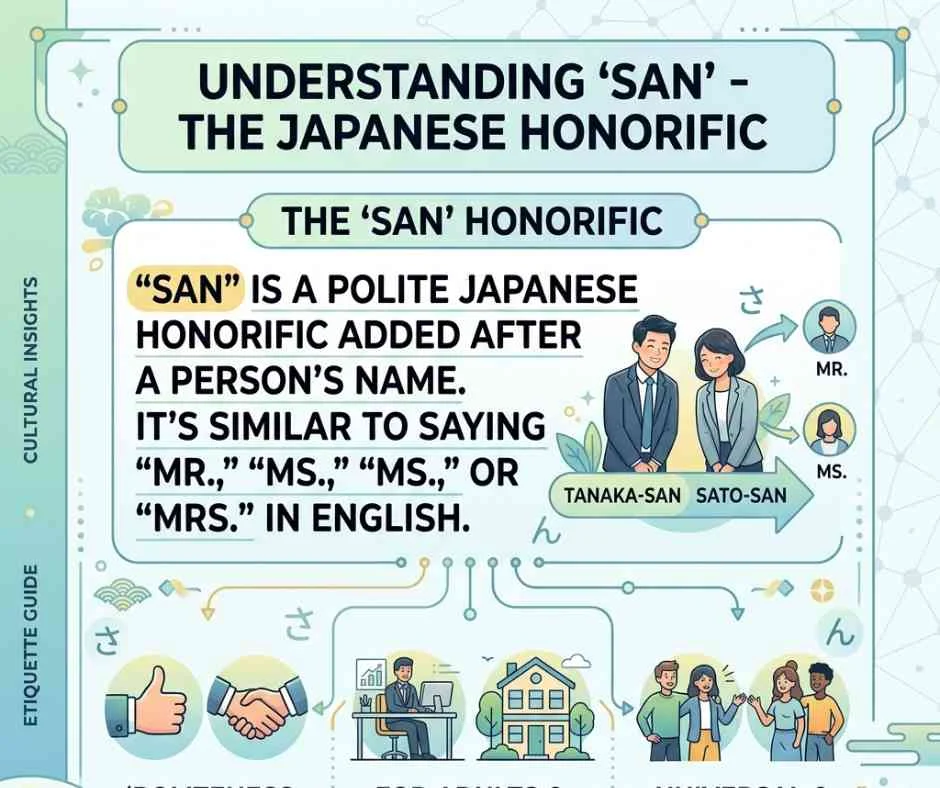
“San” is a polite Japanese honorific added after a person’s name. It’s similar to saying “Mr.,” “Ms.,” or “Mrs.” in English.
People use it to show respect, politeness, and friendliness in everyday conversations, especially when speaking to someone they don’t know very well.
Meaning & Definition
At its core, “san” (さん) is a respectful suffix used after someone’s name.
Primary Meaning:
- A polite title like:
- Mr.
- Ms.
- Mrs.
Secondary Meaning:
- A neutral, friendly way to address someone without sounding too formal or too casual
Real Chat Examples:
- “Hey, Yuki-san, are you coming today?”
- “Thank you, Tanaka-san!”
Think of it as the safest and most common way to address someone in Japanese.
Background & Origin
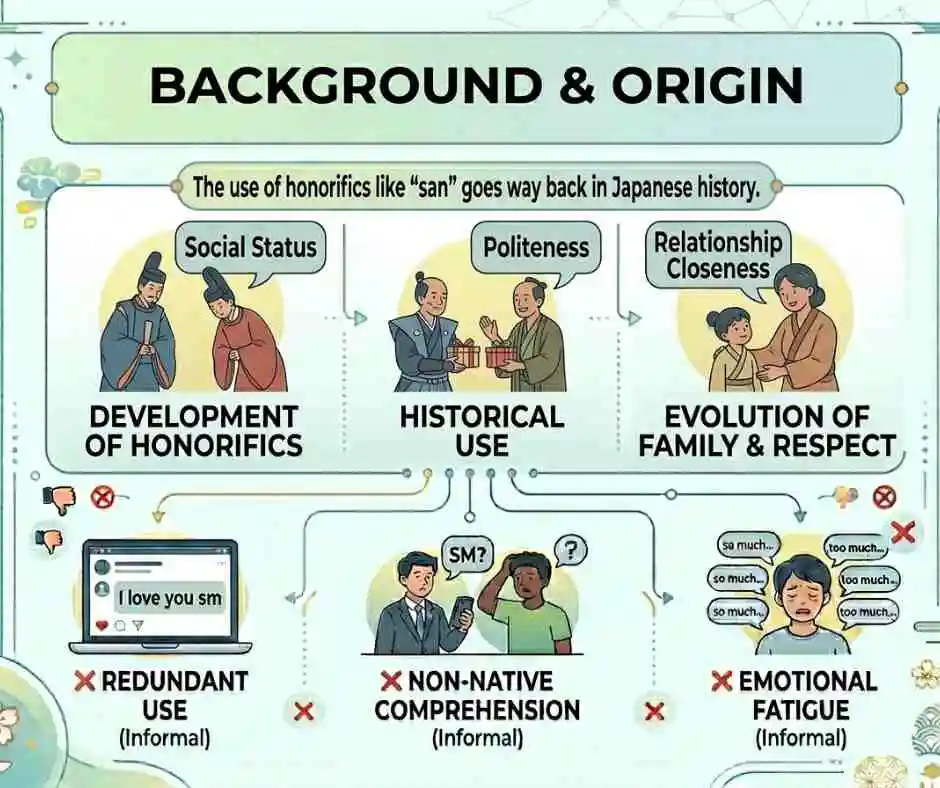
The use of honorifics like “san” goes way back in Japanese history.
- It comes from a culture that deeply values respect and hierarchy
- Honorifics developed as a way to show:
- Social status
- Politeness
- Relationship closeness
Over time, “san” became the default, because:
- It’s respectful but not overly formal
- It works in almost any situation
Today, it’s used everywhere—from business meetings to casual chats.
Usage in Different Contexts
Casual Chats
Used between friends or acquaintances when you want to stay polite.
Example:
- “Aiko-san, let’s grab lunch!”
Social Media
Often used in comments or fan culture.
Example:
- “Arigato, Kenji-san! 🙏”
Professional Use
Very common in workplaces.
Example:
- “Suzuki-san will handle the meeting.”
Gaming / Group Chats
Used in anime-based or Japanese-inspired communities.
Example:
- “Nice move, Hiro-san!”
Meanings Across Platforms
| Platform | Tone | Example |
| Friendly | “Ali-san, where are you?” | |
| Respectful | “Great art, Mika-san!” | |
| TikTok | Playful | “Notice me, senpai-san 😅” |
| Snapchat | Casual | “Yo, Riku-san 😂” |
| Discord | Community | “GG, Takashi-san!” |
Real-Life Examples & Memes
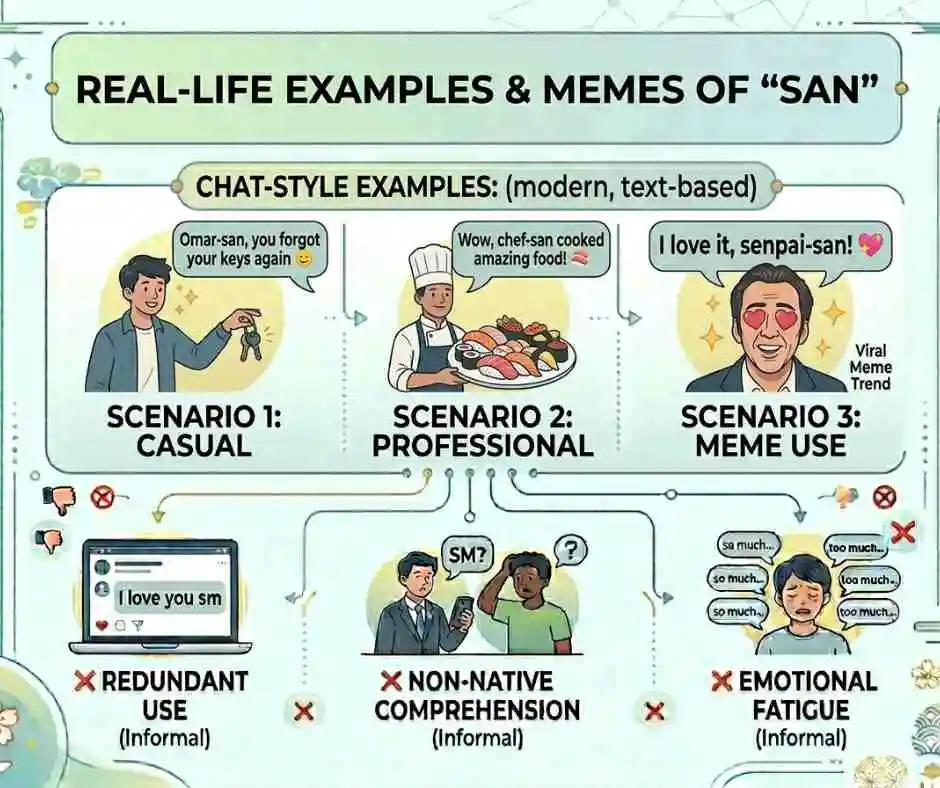
Chat-Style Examples:
- “Omar-san, you forgot your keys again 😄”
- “Wow, chef-san cooked amazing food!”
Meme-Style Lines:
- “When your friend calls you ‘boss-san’ for fun 😂”
- “Adding ‘san’ makes everything sound 10x more polite 😎”
Cultural or Regional Interpretations
US / UK
- Seen as “cool” or “anime-style”
- Used playfully among fans
Asia (India, Pakistan, Philippines)
- Often used in anime-loving communities
- Sometimes mixed into casual speech for fun
Australia
- Similar to Western use—mostly casual or fandom-based
Other Meanings
| Field | Meaning | Description |
| Language | Honorific | Used for politeness in Japanese names |
| Culture | Respect marker | Shows social awareness and manners |
| Internet | Slang style | Used jokingly in memes or fandom |
Common Mistakes & Misconceptions
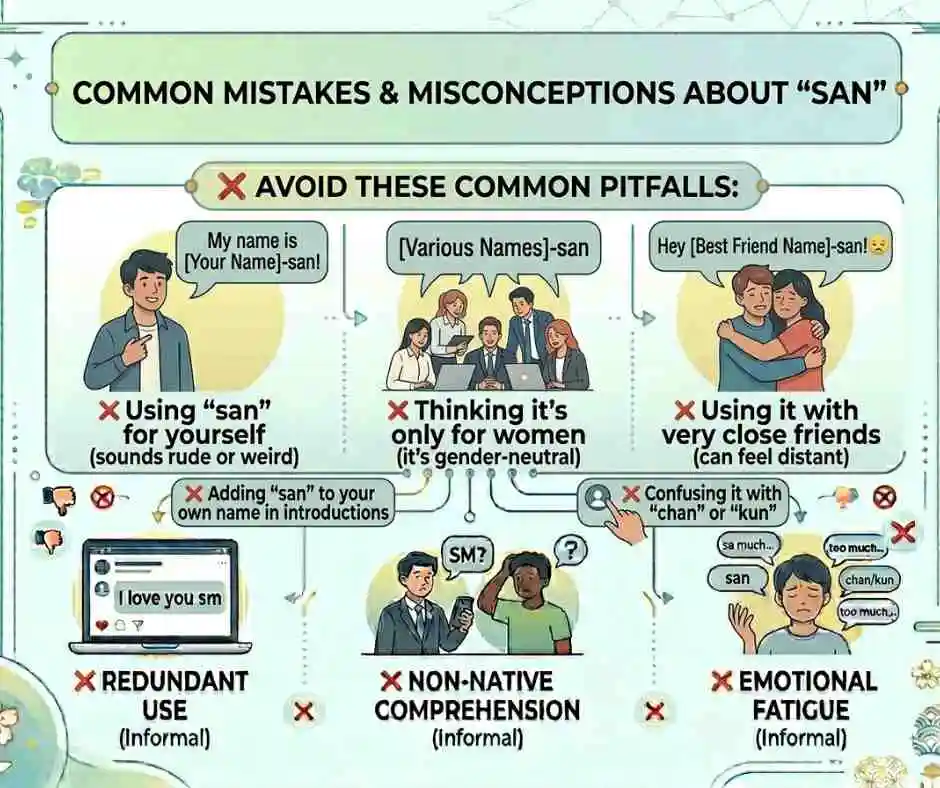
- ❌ Using “san” for yourself (sounds rude or weird)
- ❌ Adding “san” to your own name in introductions
- ❌ Thinking it’s only for women (it’s gender-neutral)
- ❌ Using it with very close friends (can feel distant)
- ❌ Confusing it with “chan” or “kun”
Psychological / Emotional Meaning
Positive:
- Respectful
- Friendly
- Polite
Neutral:
- Safe default tone
- Not too formal or casual
Negative:
- Can feel distant if used with close friends
Similar Terms & Alternatives
| Word | Meaning | Tone |
| San | Mr./Ms. | Neutral |
| Chan | Cute, affectionate | Friendly |
| Kun | For boys/juniors | Casual |
| Sama | Very respectful | Formal |
Is It Offensive or Friendly?
“San” is almost always friendly and respectful.
However:
- Using it incorrectly can feel awkward
- Not using it when expected can feel rude
Example:
- Saying “Tanaka” instead of “Tanaka-san” might sound too direct
Grammar or Linguistic Insight
Japanese doesn’t rely heavily on “you” or “Mr./Ms.” like English.
Instead:
- Names + honorifics = identity + respect
So instead of:
- “Mr. Tanaka”
They say:
- “Tanaka-san”
It’s simple once you get used to it.
How to Respond
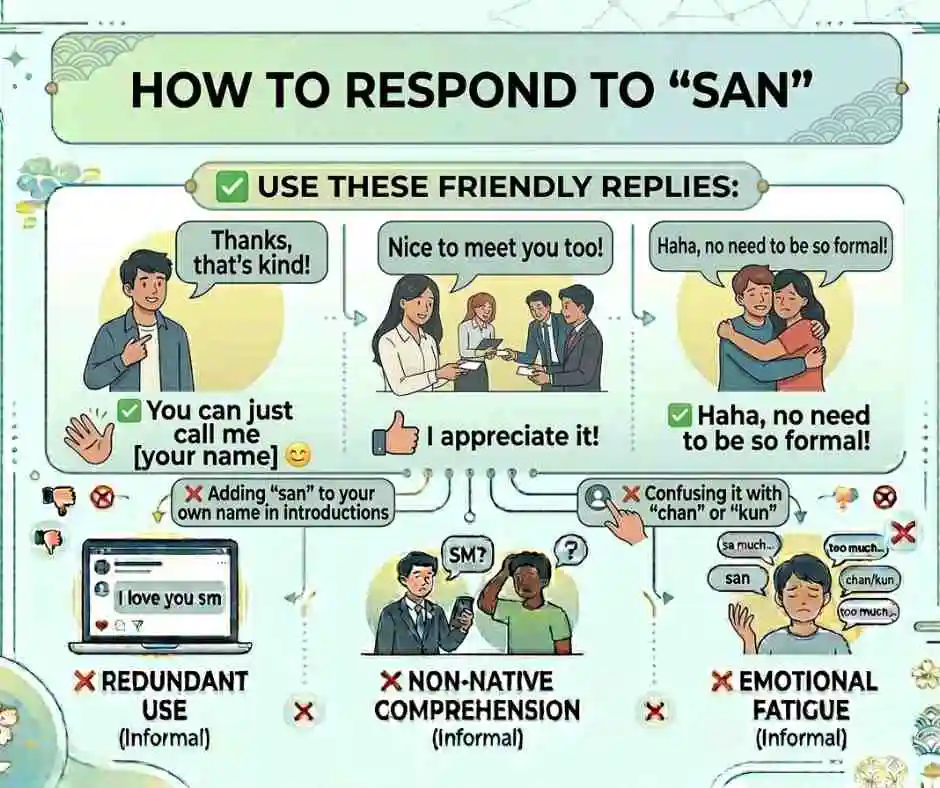
If someone uses “san” with you:
- “Thanks, that’s kind!”
- “You can just call me [your name] 😊”
- “Nice to meet you too!”
- “I appreciate it!”
- “Haha, no need to be so formal!”
Differences From Similar Words
| Term | Usage | Formality |
| San | General respect | Medium |
| Sama | High respect | High |
| Chan | Cute/friendly | Low |
| Kun | Junior/male | Low |
Relevance in Dating & Online Culture
In dating apps like Tinder or chats:
- Using “san” can feel:
- Polite
- Slightly distant
Gen Z often uses it:
- Ironically
- As part of anime humor
Example:
- “So, what are you doing tonight, Alex-san? 😉”
Popularity & Trends
Thanks to:
- Anime
- TikTok
- Online gaming
“San” has become:
- A global pop-culture term
- A fun way to sound polite or playful
You’ll often see it in:
- Comments
- Memes
- Fan communities
When NOT to Use “San” (Important)
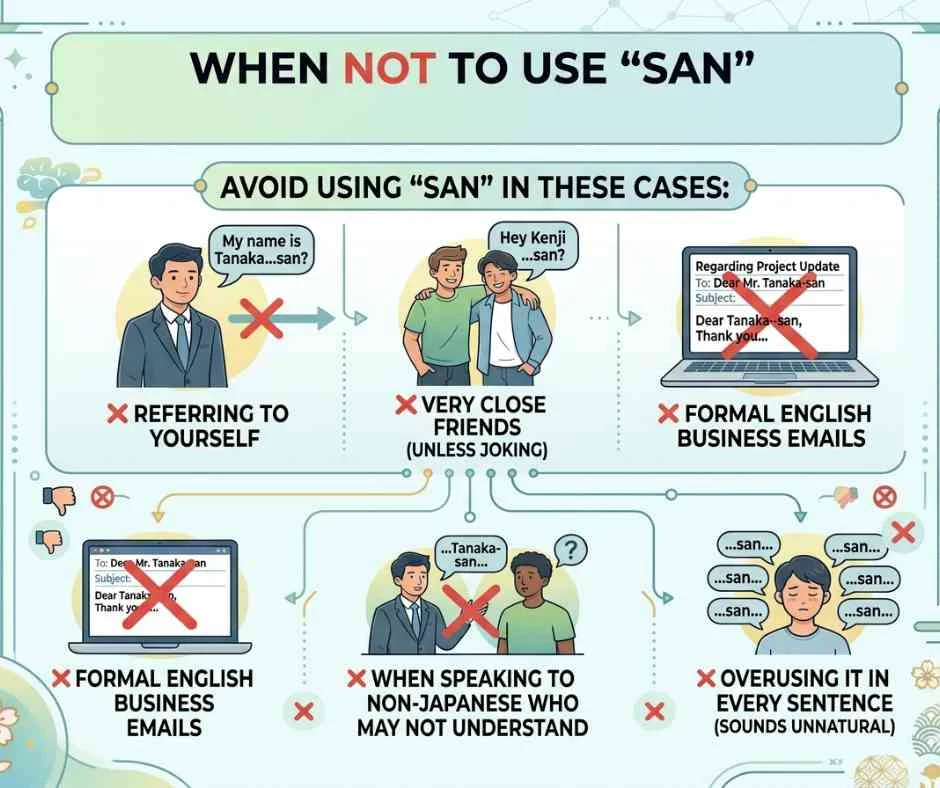
Avoid using “san” in these cases:
- ❌ Referring to yourself
- ❌ Very close friends (unless joking)
- ❌ Formal English business emails
- ❌ When speaking non-Japanese who may not understand
- ❌ Overusing it in every sentence (sounds unnatural)
FAQs
1. What does “san” mean in Japanese?
It means a polite title like Mr. or Ms., used after someone’s name to show respect.
2. Can I use “san” for friends?
Yes, but it may sound slightly formal unless used playfully.
3. Is “san” only for men or women?
No, it’s completely gender-neutral.
4. Can I use “san” for myself?
No, that’s considered rude or unnatural in Japanese culture.
5. What’s the difference between “san” and “chan”?
“San” is polite and neutral, while “chan” is cute and more informal.
Conclusion
So, what does “san” mean in Japanese? It’s more than just a word—it’s a small sign of respect that carries big cultural meaning.
Whether you’re watching anime, chatting online, or learning Japanese, understanding “san” helps you connect better and avoid awkward moments.
Next time you hear it, you’ll know exactly what it means—and maybe even use it the right way. 😊
Also Check These Posts:
What Does SSA Mean? A Complete Guide to SSA Slang, Abbreviations & Contexts
What Does Mogging Mean? Understanding Teen Slang and Social Comparison
What Does the Name Karen Mean? A Complete Guide to Its Origin, Meaning, and Popularity

Ava Grace is a passionate writer who believes in the power of words to heal, inspire, and uplift. Through Quoteliy.com, she shares daily doses of motivation, love, and positivity to brighten your day. Her mission is to turn simple quotes into meaningful moments that connect hearts and spark hope.