

When shopping for your child’s first pair of sneakers, you may have noticed labels like PS, T, or K on the boxes.
While T stands for Toddler and K for Kids, PS often confuses parents.
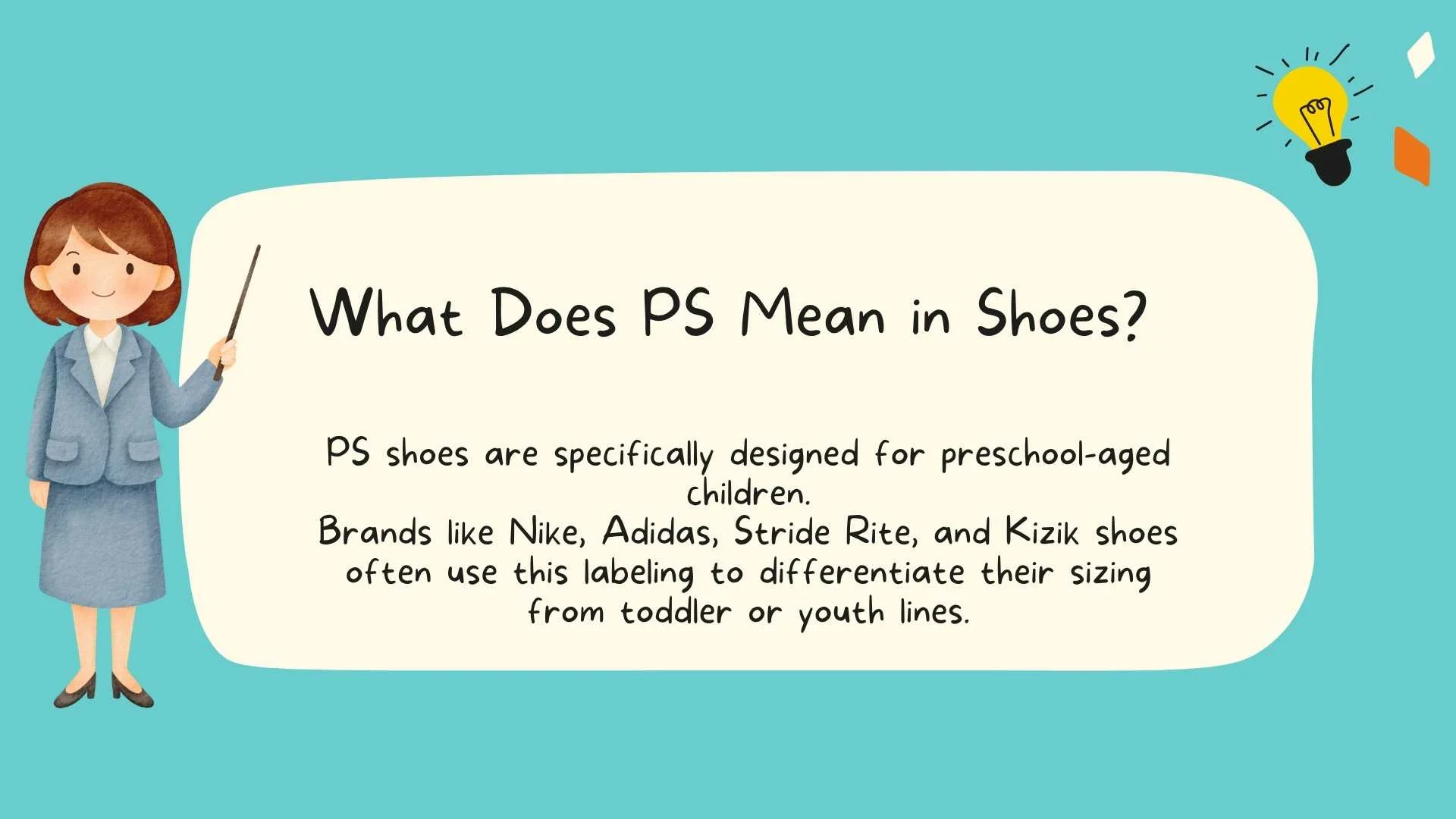
So, what does PS mean in shoes? Simply put, PS stands for Preschool, a shoe size category designed for children approximately ages 4 to 7.
Understanding this label can save you from buying shoes that are either too tight, uncomfortable, or unsafe for daily wear and play.
Choosing the right preschool shoes is not just about comfort or style; it affects your child’s foot development, posture, and mobility.
Let’s dive deep into everything you need to know about PS shoes, from sizing and features to popular brands and care tips.
Decoding the PS Label in Shoes
What PS Means in Shoe Terminology
PS shoes are specifically designed for preschool-aged children.
Brands like Nike, Adidas, Stride Rite, and Kizik shoes often use this labeling to differentiate their sizing from toddler or youth lines.
- PS = Preschool (ages 4–7)
- T = Toddler (ages 1–4)
- K/Y = Kids/Youth (ages 7+ depending on brand)
This distinction is crucial because preschool shoes are built with growing feet in mind.
They often feature flexible soles, breathable materials, and room for natural toe movement, all essential for children who are constantly on the move.
How PS Sizes Translate to Actual Foot Length
Shoe sizes can be confusing. A PS 5 is not the same as a K 5, and skipping a proper measurement can lead to discomfort.
Here’s a helpful table mapping PS sizes to US shoe sizes and foot length:
| PS Size | US Shoe Size | Foot Length (inches) | Foot Length (cm) |
| PS 5 | 10 | 5.25 | 13.3 |
| PS 6 | 11 | 5.5 | 14.0 |
| PS 7 | 12 | 5.75 | 14.6 |
| PS 8 | 13 | 6.125 | 15.6 |
| PS 9 | 1 (Kids) | 6.5 | 16.5 |
This chart is useful when shopping both in-store and online. It ensures that your child has enough room for growth and natural foot movement.
Age Appropriateness for PS Shoes
Typically, PS shoes are perfect for children aged 4 to 7, though some children may need larger or smaller sizes based on individual growth patterns.
Brands often provide age guides, but it’s always best to measure the child’s foot rather than rely solely on age.
Keep in mind: children’s feet grow quickly. Purchasing shoes with a little extra room (0.25–0.5 inches) ensures longer wear and prevents discomfort or foot problems.
Features of PS Shoes That Matter
Choosing preschool shoes isn’t just about size. Features like comfort, safety, and style make a big difference for active children.
Comfort and Fit
PS sneakers are built for comfort. Key features include:
- Lightweight materials to reduce strain during play
- Breathable fabrics to keep feet dry
- Flexible soles that support natural foot motion
- Roomy toe boxes to accommodate growing feet
Comfort is critical for daily activities, school, and playground play. Shoes that are too tight can lead to blisters, toe deformities, and even impact gait development.
Safety and Durability
When shopping for PS shoes, safety comes first. Look for:
- Slip-resistant soles to prevent accidents
- Reinforced toes to withstand wear and tear
- Durable, flexible soles that balance protection and comfort
Brands like Stride Rite and Nike PS are known for combining safety and durability without compromising style.
Easy-On, Easy-Off Designs
Preschoolers love independence, and hands-free sneakers make it easier. Features include:
- Velcro straps for quick fastening
- Elastic laces for a snug but adjustable fit
- Kizik shoes’ hands-free system for slip-on convenience
These designs encourage children to put on and take off shoes themselves, building confidence and motor skills.
Styles and Aesthetics
Kids are naturally drawn to fun designs. PS shoes often come in:
- Bright colors
- Cartoon characters
- Popular patterns like polka dots or stars
The right style keeps children excited to wear their shoes without sacrificing function.
Maintenance and Longevity
Proper care can extend the life of PS shoes. Tips include:
- Wiping off dirt after outdoor play
- Hand washing or gentle machine cycles for fabric shoes
- Storing shoes in a dry, ventilated area
- Rotating between two pairs to prevent excessive wear
Regular maintenance prevents odor, material breakdown, and early outgrowing of shoes.
How to Measure Your Child’s Feet for PS Shoes
Step-by-Step Foot Measurement
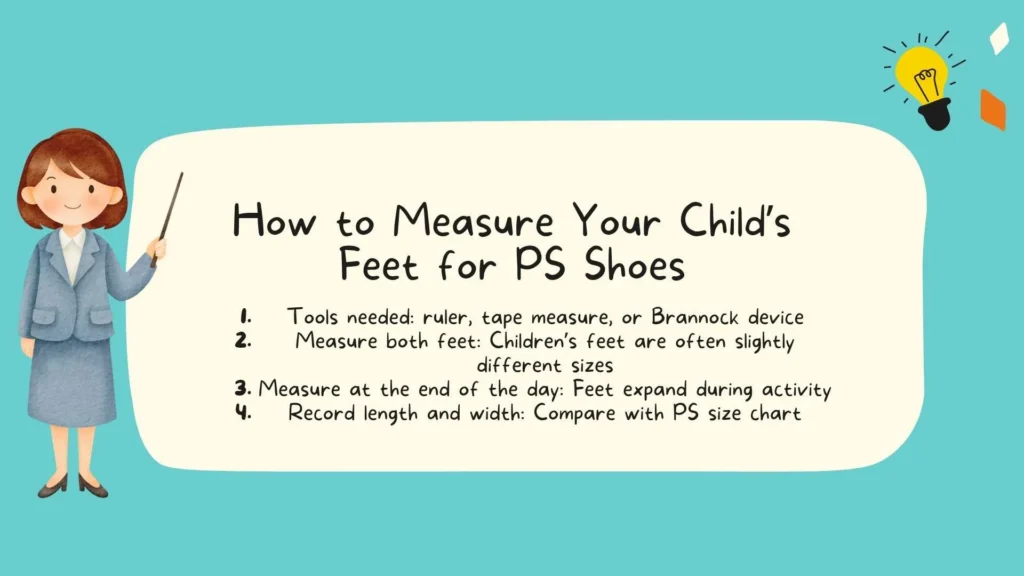
Accurate measurement is key to selecting the right preschool shoe size:
- Tools needed: ruler, tape measure, or Brannock device
- Measure both feet: Children’s feet are often slightly different sizes
- Measure at the end of the day: Feet expand during activity
- Record length and width: Compare with PS size chart
Using a PS Shoe Size Chart
A PS shoe size chart translates foot length into the correct shoe size. Always check brand-specific charts because sizing can vary slightly.
- Example: A foot measuring 6.25 inches might fit PS 7 in Nike but PS 8 in Adidas.
Accounting for Growth
Children grow fast, and shoes shouldn’t be tight. Experts recommend adding 0.25–0.5 inches of room beyond measured foot length. This extra space allows:
- Comfortable movement
- Growth without immediate need for a new pair
- Proper development of arches and toes
Checking Fit In-Store vs Online
- In-store: Have your child try both shoes, walk and run briefly, check heel slippage
- Online: Check brand sizing guides, read reviews, and consider width options
Signs Shoes Are Too Small or Too Big
- Too small: Red marks, blisters, cramped toes
- Too big: Heel slipping, tripping hazards, uneven walking
Correctly sized PS shoes prevent discomfort and long-term foot issues.
Popular PS Shoe Types and Brands
Sneakers for Preschoolers
Everyday PS sneakers are versatile for school, play, and casual outings. Popular options include:
- Nike PS sneakers – lightweight and breathable
- Adidas PS sneakers – flexible soles and fun designs
- Stride Rite PS – known for durable construction and foot support
Slip-On Sneakers and Hands-Free Shoes
- Velcro straps or elastic laces make shoes easy to wear
- Brands like Kizik offer hands-free sneakers that children can slide on without help
- Perfect for busy mornings or active preschoolers
Playground-Proof Shoes
Durable shoes designed for outdoor activity feature:
- Reinforced toes
- Slip-resistant soles
- Flexible cushioning for running, jumping, and climbing
These shoes are essential for preschool-aged children who spend lots of time on playgrounds.
Stylish and Trendy Options
Kids respond positively to colors and characters, which increases their willingness to wear shoes:
- Popular characters: Disney, Paw Patrol, Marvel
- Bright patterns and glitter designs
- Combine style with essential functional features
Seasonal and Special-Purpose Shoes
PS sizing applies to all types of footwear, including:
- Sandals for summer
- Rain boots for wet days
- Winter boots for snow and cold
Always check sizing charts and adjust for seasonal socks or layers.
Common Mistakes Parents Make When Choosing PS Shoes
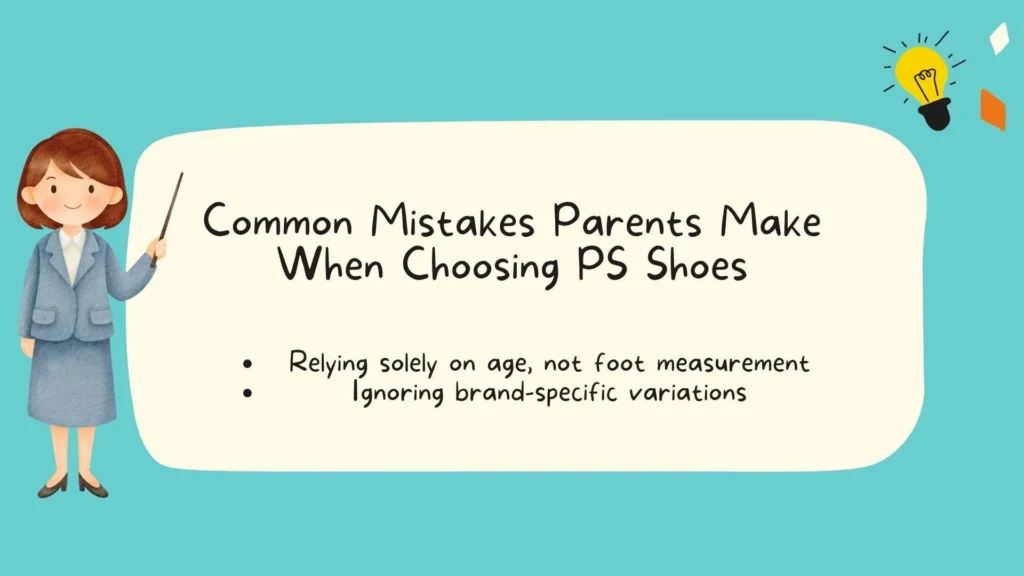
Buying the Wrong Size
- Relying solely on age, not foot measurement
- Ignoring brand-specific variations
Overlooking Material and Comfort
- Shoes too rigid or heavy
- Lack of breathable fabric or flexibility
Prioritizing Style Over Function
- Trendy shoes may compromise foot support
- Comfort and safety should come first
Not Accounting for Growth Spurts
- Children’s feet grow quickly; tight shoes lead to discomfort
- Consider slightly larger sizes or adjustable designs
Ignoring Proper Care
- Dirty, wet, or worn shoes reduce lifespan
- Regular cleaning and rotation prevent early replacement
FAQs About PS Shoes
What age does PS shoe size cover?
Typically, ages 4–7, depending on the brand and growth patterns.
How do I know my child needs a PS size?
Measure your child’s feet and compare with a PS shoe size chart. Look for comfort and a little extra room for growth.
Can PS shoes be worn for school and sports?
Yes, but check for slip-resistant soles and activity-appropriate support.
Are PS shoes different from toddler shoes?
Yes, Toddler (T) sizes are for younger children, typically ages 1–4. PS shoes are specifically for preschoolers.
How long do PS shoes usually fit?
On average, 6–12 months, depending on growth and shoe flexibility.
Conclusion: Choosing the Right PS Shoes for Your Child
Understanding PS shoes ensures your child stays comfortable, safe, and stylish.
- Measure feet accurately before buying
- Look for comfort, durability, and safety features
- Choose hands-free or Velcro designs to encourage independence
- Consider growth room to extend shoe life
By paying attention to size, features, and brand variations, you can confidently select preschool shoes that support your child’s active lifestyle and healthy foot development.
Also Check These Posts:
What Does WBU Mean : Full Explanation, Usage and Examples
What Does “67” Mean Meme? A Clear, Deep Dive Into Gen Alpha Slang
What Does Bottled-in-Bond Mean? A Complete Guide to This Whiskey Standard

Jianna is a creative writer who believes that words have the power to heal, inspire, and transform. At Quoteliy.com, she shares beautiful quotes about love, life, and self-discovery — each crafted to uplift hearts and spark reflection. Her writing style blends emotion with wisdom, leaving readers feeling understood and inspired.