

In today’s fast-paced digital world, texting isn’t just about sending messages—it’s a language of its own.
Have you ever received a message that just says “ight” and wondered what it means?
You’re not alone.
From TikTok to Snapchat, this short, three-letter word has become a staple in casual texting and online conversations.
Understanding it can help you decode casual English, navigate digital chats, and pick up on subtle nuances in tone and sentiment.
In this article, we’ll explore everything about what “ight” means in text, its origins, variations, usage patterns, and why it matters in digital communication.
Definition and Origin of “ight”
The term “ight” is a shortened form of “alright” or “aight,” used mainly in informal, casual communication.
Its meaning can shift slightly depending on context, but generally, it signals:
- Agreement or acknowledgment
- Approval or acceptance
- Casual readiness to proceed
Origins and Etymology
The word “alright” has been part of English since the 19th century.
Its shortened form “aight” developed through African American Vernacular English (AAVE) and later spread widely through online communication and texting culture.
Over time, the spelling became even shorter, resulting in “ight,” which is now commonly seen on platforms like TikTok, Snapchat, and Discord.
Pronunciation Notes
- Typically pronounced /aɪt/
- In casual speech, it may sound like “ite”
- Regional variations may exist, especially in urban and online communities
Timeline of Usage
| Era | Platform / Context | Notes |
| Early 2000s | Online forums, MSN Messenger | Initial informal usage |
| 2010s | Text messaging, Twitter | Wider adoption in casual replies |
| 2020s | TikTok, Snapchat, Instagram | Mainstream digital slang |
Linguistic Features and Patterns
Understanding this slang requires looking at how it functions in sentences and conversations.
Abbreviation and Word Shortening
- ight → alright
- aight → alright
Shortening words is common in informal text language. It saves time and keeps the tone relaxed.
Polysemy (Multiple Meanings)
Depending on context, it can express:
Neutral acknowledgment
“Ight.” → simple agreement
Mild approval
“The game was ight.”
Casual readiness
“Ight, let’s go.”
Sentence Position
It can appear in different places within a sentence:
Standalone:
“Ight.”
Sentence-initial:
“Ight, we’ll start soon.”
Sentence-final:
“See you later, ight?”
Part of Speech
It may function as:
- Interjection: “Ight, I’m ready.”
- Adjective: “The food was ight.”
- Discourse marker: Signals acknowledgment or agreement
Pragmatic Function
This expression often:
- Signals agreement or acceptance
- Softens statements
- Makes responses feel less formal
- Adds a conversational tone to digital messaging
It’s commonly paired with other casual markers in texting.
Digital Communication Contexts
Usage varies depending on platform and audience.
Popular Platforms
You’ll commonly see it on:
- TikTok – comments and captions
- Snapchat – DMs and story replies
- Instagram – casual interactions
- Discord – gaming chats
- SMS text messaging – quick replies
Audience and Roles
Most common among:
- Friends and peers
- Classmates
- Online communities
Rare in:
- Professional communication
- Academic writing
- Formal business contexts
Situational Usage
Quick acknowledgment:
“Ight, I’ll see you there.”
Casual approval:
“The movie was ight, nothing amazing.”
Readiness or agreement:
“Ight, I’m coming now.”
Code-Switching
People often shift between slang and standard English depending on context.
Example:
Texting a friend:
“Ight, I’m coming.”
Emailing a professor:
“Alright, I will attend.”
This flexibility reflects awareness of tone and audience.
Conversation Examples
Acknowledgment / Agreement
“Ight, I’ll be there soon.”
“Ight, got it.”
Casual Approval / Neutrality
“The movie was ight, not bad.”
“Ight, guess we can try that.”
Standalone Response
“Ight.”
“Ight, see ya later.”
Short responses like this fit the fast pace of modern texting.
Related Terms and Variations
Direct Variants
- aight
- alright
- ‘ighty (rare)
Similar Casual Slang
| Term | Meaning | Usage Context | Sentiment |
| ight | alright / agreement | Casual chat | Neutral / positive |
| aight | variant spelling | Informal texting | Neutral |
| alright | standard English | Any context | Neutral-positive |
| ok | acknowledgment | General texting | Neutral |
| kk | quick okay | Fast replies | Neutral |
| bet | agreement / readiness | Casual chat | Positive |
Why Understanding It Matters
Knowing this slang isn’t just about one word. It helps you understand broader digital communication patterns.
For Language Learners
- Improves understanding of casual English
- Helps decode internet slang
- Enhances real-world texting comprehension
For Social Media Users
- Reduces miscommunication
- Improves tone awareness
- Helps engage naturally with peers
Cultural Relevance
This term reflects how language evolves through:
- Online communities
- Social media culture
- Informal speech patterns
It highlights the intersection of AAVE influence, internet culture, and rapid digital communication.
Quick Tips for Using It Naturally
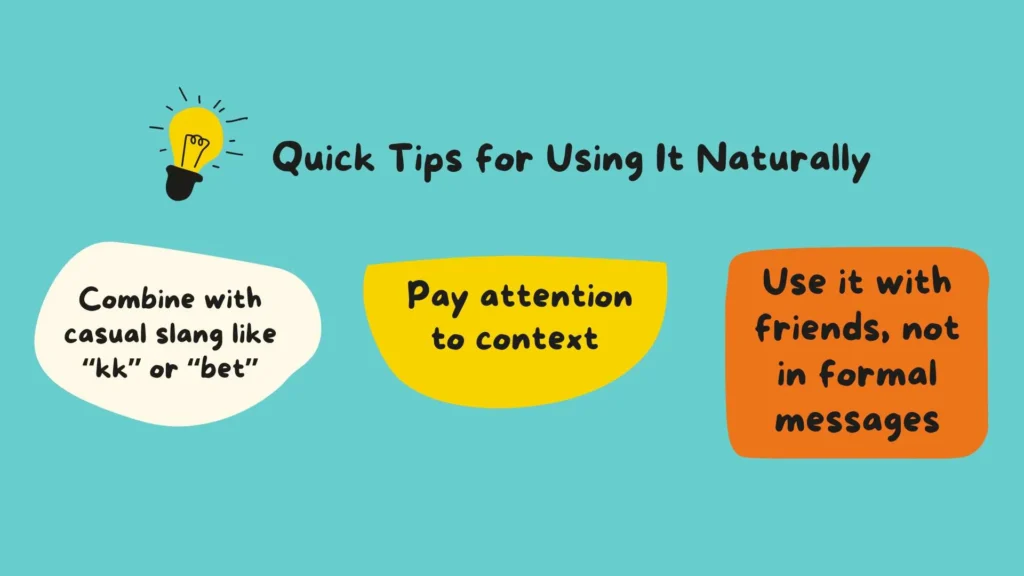
- Use it with friends, not in formal messages
- Pay attention to context (agreement vs. neutral approval)
- Combine with casual slang like “kk” or “bet”
- Keep tone relaxed and concise
- Observe trends on platforms like TikTok and Snapchat
Conclusion
“Ight” may be short, but it carries meaningful signals in casual conversations.
Whether expressing agreement, acknowledgment, or neutral approval, its interpretation depends on tone and context.
By understanding how it functions in digital communication, you can respond more naturally, avoid misunderstandings, and stay aligned with modern messaging trends.

Isabella is a passionate soul who finds beauty in words and meaning in every emotion. Through Quoteliy.com, she shares uplifting quotes that celebrate love, strength, and inner peace. Her writing reflects a heart that believes in healing through hope and inspiring others to see the light in every moment.