

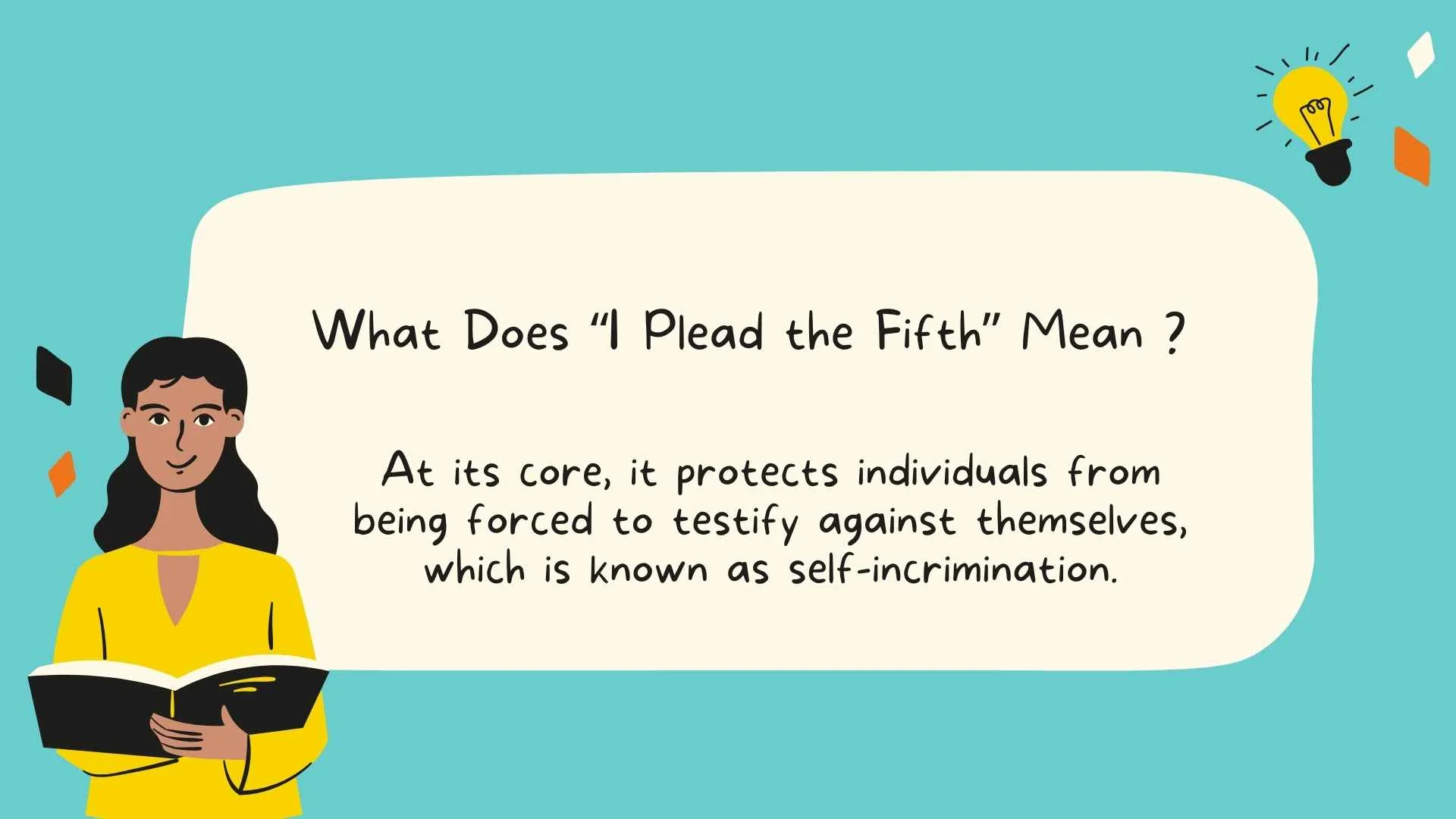
Have you ever watched a courtroom drama or a true crime show and heard someone say, “I plead the Fifth”?
It sounds mysterious, almost like a magic shield against trouble. But in reality, it’s a serious legal right rooted in the Fifth Amendment of the U.S. Constitution, designed to protect people from self-incrimination.
Whether you’re facing police interrogation, a civil case, or preparing for trial testimony, understanding this right can be crucial.
In this guide, we’ll explore what it truly means to plead the Fifth, when it applies, how it protects you, and the strategic legal considerations behind invoking this right.
Understanding the Fifth Amendment
Definition and Scope
The Fifth Amendment is part of the Bill of Rights in the U.S. Constitution.
At its core, it protects individuals from being forced to testify against themselves, which is known as self-incrimination.
It also guarantees due process, ensuring that the government follows legal procedures before depriving anyone of life, liberty, or property.
Originally, this amendment was designed to prevent abuse by authorities and ensure fairness in the legal system.
It provides a constitutional shield that applies in criminal trials, police interrogations, and even some civil proceedings.
Key Rights Under the Fifth Amendment
The Fifth Amendment offers several protections:
- Right to remain silent: You can refuse to answer questions that might incriminate you.
- Due process protections: The government must follow legal procedures before punishing someone.
- Protection against double jeopardy: You cannot be tried twice for the same offense.
These rights are interrelated, but in everyday conversation, when someone says “I plead the Fifth”, they usually mean the right to remain silent.
Federal vs. State Application
While the Fifth Amendment is a federal right, many states have incorporated its protections through the 14th Amendment. This means state courts also honor the right against self-incrimination.
For example, in Florida criminal cases, references like Florida Statutes Section 914.04 protect individuals during law enforcement questioning, ensuring their statements aren’t used improperly.
Similarly, Florida Statutes Section 90.501 governs evidence rules that intersect with the Fifth Amendment.
Misconceptions About the Fifth
A common misconception is that pleading the Fifth implies guilt. In reality, it simply means a person is exercising a constitutional right to avoid self-incrimination.
Even innocent defendants may choose silence to prevent misinterpretation of statements or to avoid perjury traps.
Legal Terminology You Should Know
Some essential terms related to pleading the Fifth include:
- Self-incrimination: Making statements that can be used against you in court.
- Custodial interrogation: Questioning while in police custody.
- Perjury: Lying under oath.
- Evidence suppression: Legal procedures to prevent illegally obtained evidence from being used in court.
What it Means to Plead the Fifth
Definition in Practical Terms
To plead the Fifth is to invoke your right to remain silent. When asked questions by law enforcement, prosecutors, or during testimony, you can say “I plead the Fifth” to avoid answering anything that could potentially incriminate you.
It’s not a loophole, but a strategic tool in criminal defense. Silence, in this case, becomes a legal action that protects your rights.
When You Can Plead the Fifth
You can invoke this right in several situations:
- Police interrogations: Especially during custodial interrogation, when you are not free to leave.
- Trial testimony: You can refuse to answer questions that could incriminate you.
- Civil cases: Though the right exists, silence may lead to negative inferences in civil proceedings.
Scenarios Where Pleading the Fifth Is Strategic
Invoking the Fifth is often more about strategy than guilt. For example:
- High-stress questioning: Police may ask complex, confusing, or misleading questions.
- Fraud investigations: You may avoid statements that could be twisted against you later.
- Conspiracy charges: Silence prevents accidental admission of involvement.
Limitations and Exceptions
While powerful, the Fifth has limits:
- Speaking voluntarily can waive the right.
- Not all civil cases allow a complete shield against negative inferences.
- The right doesn’t prevent all questioning, just answers that could be self-incriminating.
Common Misunderstandings
Many assume that refusing to answer automatically equals guilt.
Courts have repeatedly ruled that invoking the Fifth is a constitutional right, and silence alone cannot be used to imply guilt in criminal cases.
Legal Protections and Risks
Avoiding Self-Incrimination
Statements you make can be used against you, even if unintended. For instance:
- Saying “I didn’t see anything” may imply knowledge of a crime.
- Memory lapses or inconsistent answers can be construed as evidence.
By pleading the Fifth, you avoid unintentional admissions that could harm your defense.
Preventing Perjury Traps
A perjury trap occurs when law enforcement asks questions intending to catch someone lying under oath.
Pleading the Fifth protects you from accidentally committing perjury, which carries serious legal consequences.
Collateral Consequences
Even if charges are minor, improper statements can have long-term consequences:
- Loss of employment
- Voting restrictions
- Firearms ownership limitations
- Criminal record implications
Procedural Safeguards
When law enforcement questions you, certain rules protect your rights:
- Miranda warning: Required during custodial interrogation to inform you of your right to remain silent.
- Evidence suppression: Statements obtained without proper advisement may be inadmissible in court.
Strategic Silence as a Legal Tool
Silence isn’t passive. It can be an active strategy to:
- Negotiate charge reductions
- Facilitate plea deals
- Access diversion programs
- Reduce potential jail time and fines
How Pleading the Fifth Works in Practice
Police Interrogations
During police questioning, explicitly invoking the Fifth is crucial. Saying “I choose to remain silent and invoke my Fifth Amendment rights” signals your intent to protect yourself legally.
Tips:
- Never answer before consulting an attorney.
- Avoid casual conversation that could be used as evidence.
- Document your interactions if possible.
Trial Testimony
In court, a witness may plead the Fifth to avoid answering incriminating questions.
The judge must respect this right, and silence cannot imply guilt in criminal cases.
Civil Cases
In civil litigation, the right exists, but plaintiffs or opposing parties may request adverse inferences.
Here, invoking the Fifth can carry strategic risks, making attorney guidance vital.
Role of Legal Representation
An experienced Florida criminal defense attorney can help:
- Determine when to invoke the Fifth
- Guide responses to misleading questions
- Prevent waiver of rights
- Protect against law enforcement misconduct
Example Scenarios
| Scenario | Action | Result |
| Minor traffic offense | Plead the Fifth | Avoid creating statements that could escalate to criminal charges |
| Fraud investigation | Plead the Fifth | Protect against self-incrimination while attorney reviews evidence |
| Civil deposition | Plead the Fifth cautiously | Risk of adverse inference; attorney advice required |
| Conspiracy case | Plead the Fifth | Silence prevents accidental admission of involvement |
Legal Strategy and Defense Considerations
When Pleading the Fifth Helps
Invoking the Fifth can be a preventative measure, protecting your rights before charges are filed. Strategic silence can prevent:
- Law enforcement overreach
- Statements that might weaken your defense
- Misinterpretation of testimony
Reducing Long-Term Consequences
Proper use of the Fifth helps protect:
- Your criminal record
- Future employment opportunities
- Social and legal reputation
Plea Deals and Diversion Programs
Courts may view strategic silence favorably during negotiations, potentially leading to:
- Charge reduction
- Alternative sentencing
- Probation or diversion programs
Strategic Timing
Knowing when to plead the Fifth is as important as knowing how to do it. Timing can influence:
- Investigations
- Interviews
- Courtroom proceedings
Attorney Guidance
Legal counsel is critical for avoiding inadvertent waivers and ensuring your rights are fully protected. They guide you through:
- Police questioning
- Depositions
- Cross-examination in court
Practical Table of Terms and Their Legal Significance
| Category | Terms / Phrases | Practical Notes |
| Legal Amendment | Fifth Amendment, Right to remain silent | Core constitutional protection |
| Legal Action | Plead the Fifth, Invoking rights, Evidence suppression | Actions a defendant can take |
| Legal Risks | Self-incrimination, Perjury, Collateral consequences | Risks avoided by strategic silence |
| Entities | Florida Statutes 914.04, 90.501, Florida criminal defense attorney | State-level context and professionals |
| Scenario Terms | Police interrogation, Trial, Civil case, Future charges | Real-world applications |
| Defense Strategy | Strategic silence, Charge reduction, Plea deal, Diversion programs | Legal tactics for mitigation |
| Related Concepts | Misinterpretation of statements, Law enforcement misconduct, Circumstantial evidence | Things to watch out for |
Frequently Asked Questions (FAQ)
Why would an innocent person plead the Fifth?
Even innocent people may plead the Fifth to avoid misinterpretation of statements or accidental self-incrimination.
Does pleading the Fifth imply guilt?
No. Silence is a constitutional right. Courts cannot assume guilt solely based on invoking it.
When should I plead the Fifth during police questioning?
You should do so if answering could potentially incriminate you. Always consult a criminal defense attorney first.
Can my silence be used against me in court?
In criminal cases, no. In civil cases, it may allow an adverse inference, which is why legal guidance is essential.
Can I plead the Fifth in a civil case?
Yes, but the consequences differ. Courts may draw negative inferences.
What happens if I plead the Fifth in a trial?
Your statements remain protected. You are exercising a legal right, and silence cannot be used to imply guilt in criminal court.
Conclusion
Pleading the Fifth is not a sign of guilt. It’s a powerful legal right designed to protect individuals from self-incrimination, prevent perjury traps, and safeguard long-term legal consequences.
Whether during police interrogation, a civil deposition, or trial testimony, understanding this right and using it strategically with attorney guidance; can make all the difference in protecting your legal rights and maintaining control over your defense.

Bonnie Mae is a thoughtful writer with a deep love for words that inspire and heal. At Quoteliy.com, she shares heartfelt quotes about life, love, and self-growth — each crafted to bring peace and positivity to your day. Her passion lies in turning simple thoughts into meaningful reflections that touch hearts and spark hope.