
Imagine this… you find a wallet on the road. No one’s around. No cameras.
What would you do?
Keep it? Ignore it? Or try to return it?
That tiny moment says a lot about whether something is ethical or not.
We face choices like this every day; online, at work, even in small chats.
I’ve seen how people throw around words like “ethical” on social media without fully understanding it.
So let’s break it down in a way that actually makes sense.
What Does Ethical Mean? (Direct Answer)
Ethical means doing what is right, fair, and morally acceptable based on values like honesty, respect, and responsibility.
It refers to actions that follow a set of moral principles, whether in daily life, work, or online behavior, helping people make good and fair decisions.
Meaning & Definition
At its core, ethical is about right vs. wrong behavior.
Primary Meaning:
- Doing what is morally right and fair
Secondary Meanings:
- Following rules or principles of good behavior
- Acting with honesty and integrity
Simple Chat Examples:
- “It’s not ethical to cheat in exams.”
- “She made an ethical choice by telling the truth.”
👉 Think of it as your inner voice saying, “This is the right thing to do.”
Background & Origin
The word ethical comes from the Greek word “ethos,” which means character or moral nature.
It became popular in philosophy first, especially when thinkers started discussing:
- Right and wrong
- Good and bad behavior
Over time, it moved into everyday life, including:
- Business ethics
- Social media behavior
- Personal decision-making
Today, it’s a powerful word used everywhere; from classrooms to TikTok debates.
Usage in Different Contexts
Casual Chats
Used when talking about fairness or honesty.
Example:
- “That wasn’t ethical, bro. You knew the answer already.”
Social Media
Often used in debates or awareness posts.
Example:
- “Is it ethical for brands to copy small creators?”
Professional Use
Very common in workplaces.
Example:
- “We must follow ethical business practices.”
Gaming / Group Chats
Used when talking about fair play.
Example:
- “Camping like that isn’t ethical gameplay 😅”
Meanings Across Platforms
| Platform | Tone | Example |
| Casual | “Be ethical yaar, don’t lie” | |
| Opinionated | “Ethical fashion matters 🌱” | |
| TikTok | Debated | “Is this trend even ethical?” |
| Snapchat | Light | “Not ethical but funny 😂” |
| Discord | Strategic | “Play fair, keep it ethical” |
Real-Life Examples & Memes
Chat-Style Examples:
- “Taking credit for someone else’s work is not ethical.”
- “At least try to be ethical, man.”
Meme-Style Lines:
- “My brain: Be ethical
My heart: But it’s easier this way 😭” - “Doing the ethical thing… even when no one’s watching 💯”
Cultural or Regional Interpretations
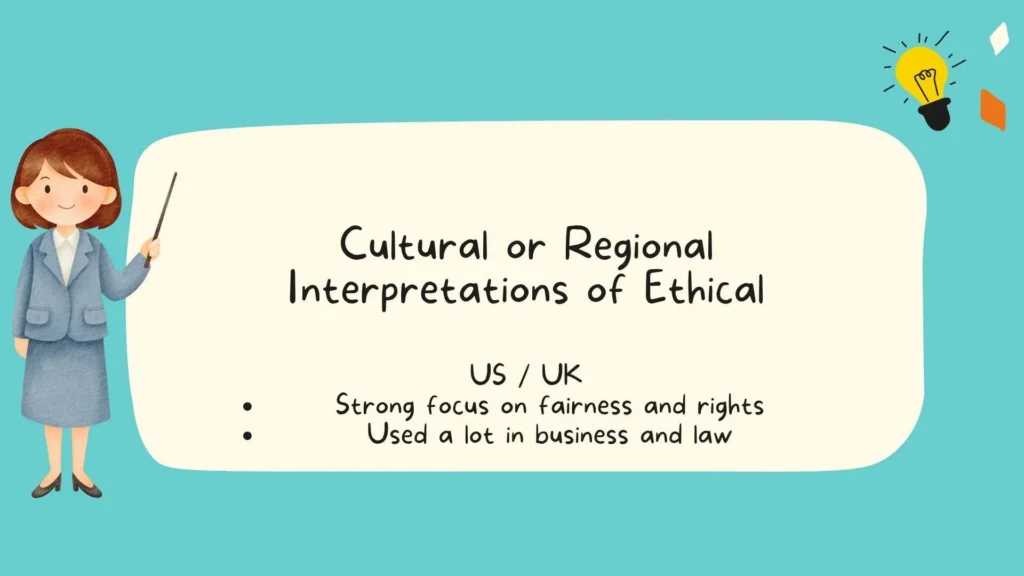
US / UK
- Strong focus on fairness and rights
- Used a lot in business and law
Asia (India, Pakistan, Philippines)
- Often linked to honesty and respect
- Strong connection with cultural and religious values
Australia
- Common in workplace and education
- Focus on fairness and equality
Other Meanings
| Field | Meaning | Description |
| Philosophy | Moral principles | Study of right and wrong behavior |
| Business | Ethical practices | Fair and honest company behavior |
| Technology | Ethical AI | Responsible use of artificial intelligence |
| Medicine | Medical ethics | Doing what’s best for patients |
Common Mistakes & Misconceptions
- Thinking ethical means “legal” (not always the same)
- Assuming it’s only for professionals
- Using it only in serious situations
- Believing everyone agrees on what’s ethical
Psychological / Emotional Meaning
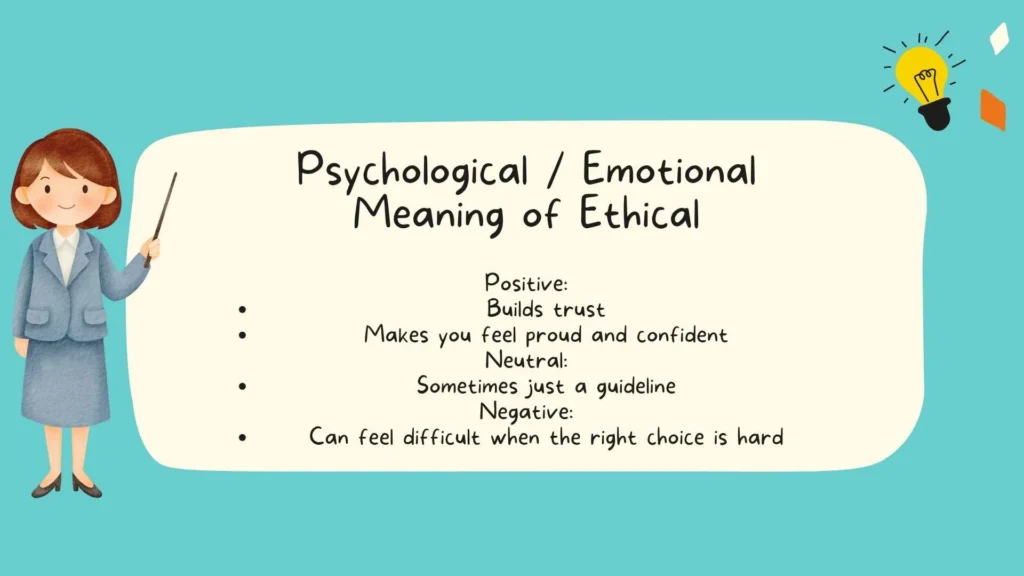
Positive:
- Builds trust
- Makes you feel proud and confident
Neutral:
- Sometimes just a guideline
Negative:
- Can feel difficult when the right choice is hard
Similar Terms & Alternatives
| Word | Meaning | Tone |
| Moral | Right or wrong behavior | Neutral |
| Honest | Telling the truth | Positive |
| Fair | Just and equal | Friendly |
| Right | Correct action | Simple |
| Principled | Strong values | Formal |
Is It Offensive or Friendly?
The word ethical is generally respectful and neutral.
Friendly Example:
- “That was an ethical decision, respect!”
Sensitive Example:
- “Your behavior isn’t ethical.” (can sound judgmental)
👉 Tone matters. It can feel like criticism if used harshly.
Grammar or Linguistic Insight
“Ethical” is an adjective.
Forms:
- Ethical (adjective)
- Ethics (noun)
- Ethically (adverb)
Language has evolved, and now this word is used beyond philosophy into daily life and online conversations.
How to Respond
If someone talks about being ethical, you can reply like:
- “Yeah, that’s the right thing to do.”
- “I agree, honesty matters.”
- “Let’s keep it fair.”
- “That makes sense.”
- “Respect for doing that.”
Differences From Similar Words
| Word | Key Difference |
| Ethical | Based on moral principles |
| Legal | Based on law |
| Moral | Personal beliefs of right/wrong |
| Honest | Focuses on truth |
| Fair | Focuses on equality |
Relevance in Dating & Online Culture
In modern dating and apps like Tinder, being ethical matters more than ever.
Examples:
- Being honest about intentions
- Not ghosting people unfairly
- Respecting boundaries
Gen Z often calls out:
- “Toxic behavior”
- “Unethical dating habits”
👉 Being ethical = being respectful and real.
Popularity & Trends
On TikTok and Instagram:
- People discuss ethical fashion
- Call out unethical brands
- Share “ethical life hacks”
Memes and trends often highlight:
- Doing the right thing
- Or failing to do so 😅
👉 Ethics is now a trending topic, especially among Gen Z.
When NOT to Use “Ethical” (IMPORTANT)
Avoid using it in:
- Very casual jokes (can sound too serious)
- Emotional arguments (may sound like judging)
- Situations where simple words work better
- Talking to someone who may feel attacked
Example to avoid:
- “You’re not ethical at all” ❌ (too harsh)
FAQs
What does ethical mean in simple words?
It means doing what is right, fair, and honest based on good values.
Is ethical the same as legal?
No. Something can be legal but still not ethical.
Why is being ethical important?
It builds trust, respect, and strong relationships.
Can ethical mean different things to different people?
Yes. Values can vary based on culture and beliefs.
Is ethical used in daily life?
Yes, people use it in work, school, and even online conversations.
Conclusion
So, what does ethical mean?
It’s simply about doing the right thing; even when it’s hard or no one is watching.
In a world full of quick choices and online noise, being ethical helps you stay grounded.
It builds trust, respect, and a strong character.
And honestly, those small ethical choices?
They’re what truly define you 💙
Also Check These Posts:
What Does the Percentage of Rain Mean Truth Behind That Confusing Weather for 2026
What Does an Upside Down Pineapple Mean? 🍍 The Hidden Message You Might Be Missing
What Does “Complex” Mean? Simple Explanation + Real-Life Examples You’ll Actually Understand

Jianna is a creative writer who believes that words have the power to heal, inspire, and transform. At Quoteliy.com, she shares beautiful quotes about love, life, and self-discovery — each crafted to uplift hearts and spark reflection. Her writing style blends emotion with wisdom, leaving readers feeling understood and inspired.