

Demisexuality is one of the lesser-known, yet deeply significant, sexual orientations on the asexual spectrum.
Unlike other sexual orientations, demisexuals experience sexual attraction primarily after forming a strong emotional bond with someone.
This concept challenges traditional assumptions about instant sexual attraction and highlights the intricate interplay between emotional depth, connection, and sexual desire.
In this article, we’ll explore what it truly means to be demisexual, how it fits into the broader landscape of sexual orientation, and the ways it affects relationships, dating, and social perception.
Introduction to Demisexuality
The term demisexual was first recognized in the early 2000s, around 2006–2008, as communities began exploring nuances within asexuality.
A demisexual person does not typically experience sexual attraction based solely on physical appearance.
Instead, attraction emerges only after forming a strong emotional or psychological connection.
For example, while casual dating often prioritizes physical chemistry, a demisexual individual might require months of friendship and trust-building before any sexual feelings develop.
This approach emphasizes emotional readiness and respects personal boundaries, highlighting the complexity of human sexuality.
Understanding demisexuality is essential in modern society because it challenges conventional dating norms, encourages patience in relationships, and promotes emotional depth over instant gratification.
The Demisexual Identity
Definition and Core Concept
At its heart, demisexuality is defined by a sexual attraction that arises only after establishing a deep emotional connection.
This differentiates it from asexuality, where sexual attraction is generally absent, and graysexuality, which exists somewhere in between.
Key aspects of demisexual identity include:
- Emotional Bond First: Attraction emerges from feelings of closeness.
- Psychological Layer: Sexual desire is tied to emotional, not purely physical, factors.
- Individual Variability: Every demisexual person’s experience is unique, highlighting the nuance in attraction.
Shorthand and Recognition
In LGBTQ+ communities, demisexuals often identify with the asexual spectrum, sometimes represented with the ACE flag.
While not universally recognized in mainstream media, the term has grown in awareness through online forums, dating apps, and social media communities.
Self-Identification vs Behavior
It’s important to note the distinction between identifying as demisexual and actual behavior.
A person might self-identify as demisexual yet still engage in sexual activities in specific contexts.
This emphasizes the fluidity of sexual orientation and the personal nature of attraction.
How Demisexuality Fits into Sexual Orientation
Position on the Spectrum
Demisexuality sits on the asexual spectrum, bridging the gap between those who feel no sexual attraction (asexual) and those who experience attraction more readily (allosexuals).
Comparison with Other Orientations:
| Orientation | Core Definition | Relation to Demisexuality |
| Asexual | Little or no sexual attraction | Demisexuals may initially resemble asexuals but can experience attraction later |
| Graysexual | Rare or situational sexual attraction | Shares elements with demisexuality |
| Sapiosexual | Attraction to intelligence | May overlap emotionally but not necessarily demisexual |
| Bisexual / Pansexual | Attraction to multiple genders | Demisexuality can exist alongside these orientations |
| Heterosexual / Gay / Lesbian / Queer | Traditional sexual orientations | Demisexuals may identify with any gender orientation but with emotional prerequisites |
Fluidity and Evolution
Sexual orientation is not always fixed. A demisexual individual’s experience can evolve over time or across life stages.
Emotional experiences, personal growth, and social contexts can shift one’s attraction patterns, underscoring the human sexuality complexity and the importance of individual experience.
Attraction and Relationships for Demisexuals
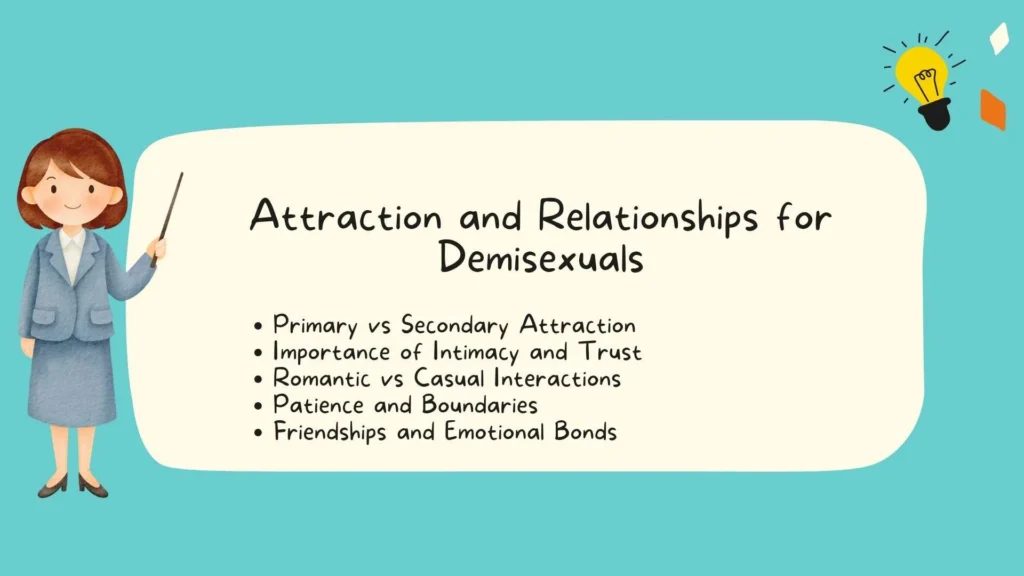
Primary vs Secondary Attraction
Primary attraction refers to immediate sexual or physical appeal. For demisexuals, this is secondary to emotional or intellectual bonds.
Only after developing intimacy does sexual attraction emerge.
Importance of Intimacy and Trust
Trust and emotional connection are non-negotiable for most demisexual individuals. Without these, sexual attraction rarely develops.
This emphasizes emotional readiness as a critical factor in dating and relationships.
Romantic vs Casual Interactions
Many demisexuals prefer romantic involvement over casual encounters.
While casual sex is common in broader society, demisexuals often require more time and patience to form meaningful connections.
Patience and Boundaries
Boundaries are central. Demisexuals might establish clear timelines for intimacy, preferring to build friendships first.
Respecting these boundaries ensures mutual understanding and emotional safety.
Friendships and Emotional Bonds
Some demisexuals experience attraction almost exclusively within close friendships, highlighting the interplay between friendship and romance.
Emotional familiarity often becomes the foundation for sexual desire.
Common Misconceptions About Demisexuality
Many people misunderstand demisexuality, often equating it with shyness or social awkwardness. Here’s a closer look:
- “It’s Just Shyness” – Being demisexual is not about being introverted; it’s about requiring emotional bonds before sexual attraction.
- “They Can’t Feel Sexual Desire” – Demisexuals can feel sexual desire; it just manifests differently.
- Media Stereotypes – Representation often mislabels demisexuals as “cold” or “unromantic,” which is inaccurate.
- Misunderstood Signals – Society may misinterpret demisexual cues as disinterest or rejection.
- Individual Variability – No two demisexual experiences are identical, emphasizing the nuance in human attraction.
Historical and Cultural Context
Timeline of Recognition
The term demisexual gained traction around 2006–2008, with discussions emerging on forums like AVEN (Asexuality Visibility and Education Network).
Early recognition helped shape modern understanding of sexual diversity.
Community Formation
Demisexuals often find support in LGBTQ+ communities, online forums, and social networks.
These spaces provide validation, education, and avenues for exploring personal identity.
Impact of Social Norms
Cultural expectations often prioritize physical attraction, making demisexual experiences less visible.
Social pressure can affect dating behavior and self-perception, emphasizing the importance of emotional layers in attraction.
Global Perspective
While some Western countries recognize and discuss demisexuality openly, other cultures may lack terminology or awareness.
Online communities have bridged this gap, offering inclusivity and shared understanding across borders.
Terminology Development
Terms like graysexual, sapiosexual, and asexual spectrum evolved alongside demisexuality to capture the complexity and fluidity of human sexuality.
Language plays a crucial role in reducing misunderstanding.
Practical Advice for Dating and Social Life
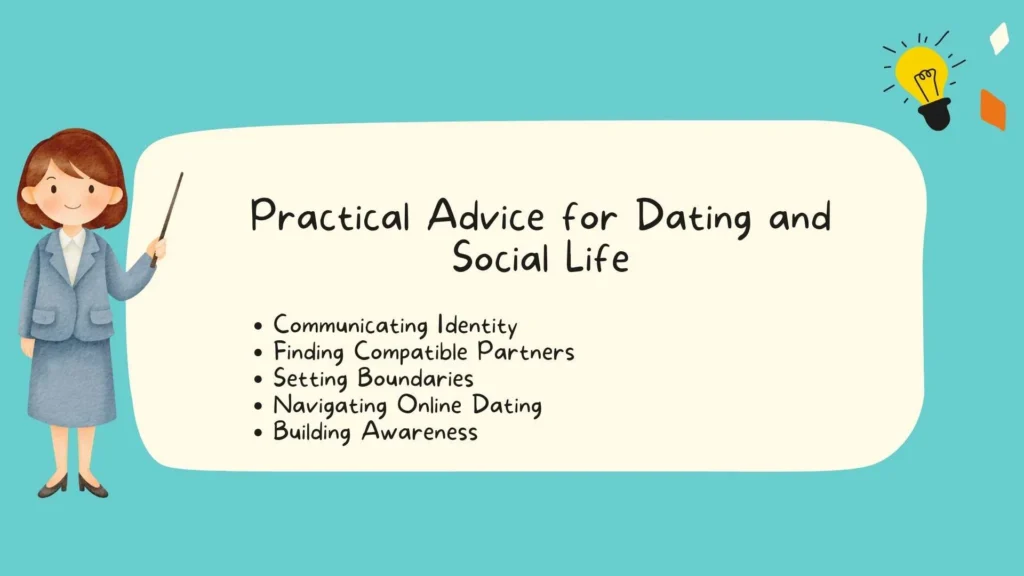
Communicating Identity
Explaining demisexuality to a partner can prevent miscommunication.
Be honest about emotional prerequisites and discuss expectations around intimacy.
Finding Compatible Partners
Compatibility often depends on emotional intelligence, patience, and mutual respect. Platforms or communities emphasizing LGBTQ+ inclusivity can help.
Setting Boundaries
Clearly defined boundaries help maintain emotional safety and prevent pressure to engage in sexual activity prematurely.
Navigating Online Dating
Use filters or profiles highlighting sexual orientation and values. Transparent communication fosters trust and aligns emotional expectations.
Building Awareness
Educating friends, family, and partners about demisexuality encourages understanding, reduces misconceptions, and fosters acceptance.
Psychological and Behavioral Insights
Preference Formation
Demisexuals often prioritize personality, shared values, and emotional connection over physical appearance.
This process highlights individual experience in sexual attraction.
Identity and Self-Definition
Understanding demisexuality often involves introspection.
Self-identification can empower individuals to navigate relationships with confidence.
Emotional Readiness
Sexual desire may not be immediate.
Recognizing emotional readiness ensures relationships are healthy, respectful, and fulfilling.
Human Sexuality Complexity
Demisexuality exemplifies the diversity of sexual orientation, showing that sexual attraction is not a one-size-fits-all experience.
Social Perception and Dating Behavior
Societal expectations can challenge demisexuals.
Educating others about the emotional prerequisites of attraction helps reduce stigma and enhances relationship satisfaction.
Conclusion
Demisexuality is a unique sexual orientation emphasizing emotional bonds and intimacy over immediate sexual attraction.
It challenges societal norms, highlights the complexity of human sexuality, and promotes healthy relationship boundaries.
By understanding the emotional, psychological, and social layers of demisexuality, we create a more inclusive world where all forms of sexual and romantic attraction are respected.
Also Check These Posts:
What Does Shibal Mean? Understanding the Korean Swear Word
What Does YW Mean in Text? Complete Guide to its Meaning, Uses and Context
What Does Cancelled Call Mean? Complete Guide to Understanding Cancelled, Missed and Blocked Calls

Isabella is a passionate soul who finds beauty in words and meaning in every emotion. Through Quoteliy.com, she shares uplifting quotes that celebrate love, strength, and inner peace. Her writing reflects a heart that believes in healing through hope and inspiring others to see the light in every moment.