

Imagine this: a friend is struggling, clearly overwhelmed, and instead of just saying “I’m sorry,” you sit with them, listen, and offer real help.
That moment captures the true essence of being compassionate.
So, what does compassionate mean; really?
It goes beyond feeling. It involves understanding someone’s pain and taking action to ease it.
In today’s fast-paced, emotionally complex world, compassion isn’t just a virtue.
It’s a skill that shapes relationships, improves mental health, and strengthens human connection.
This guide breaks it all down. You’ll learn the real meaning, how it differs from empathy, and how to develop compassion without burning out.
Compassionate Meaning Explained in Simple Words
What Does Compassionate Mean (Clear Definition)
At its core, being compassionate means:
Recognizing someone’s suffering and actively wanting to help reduce it.
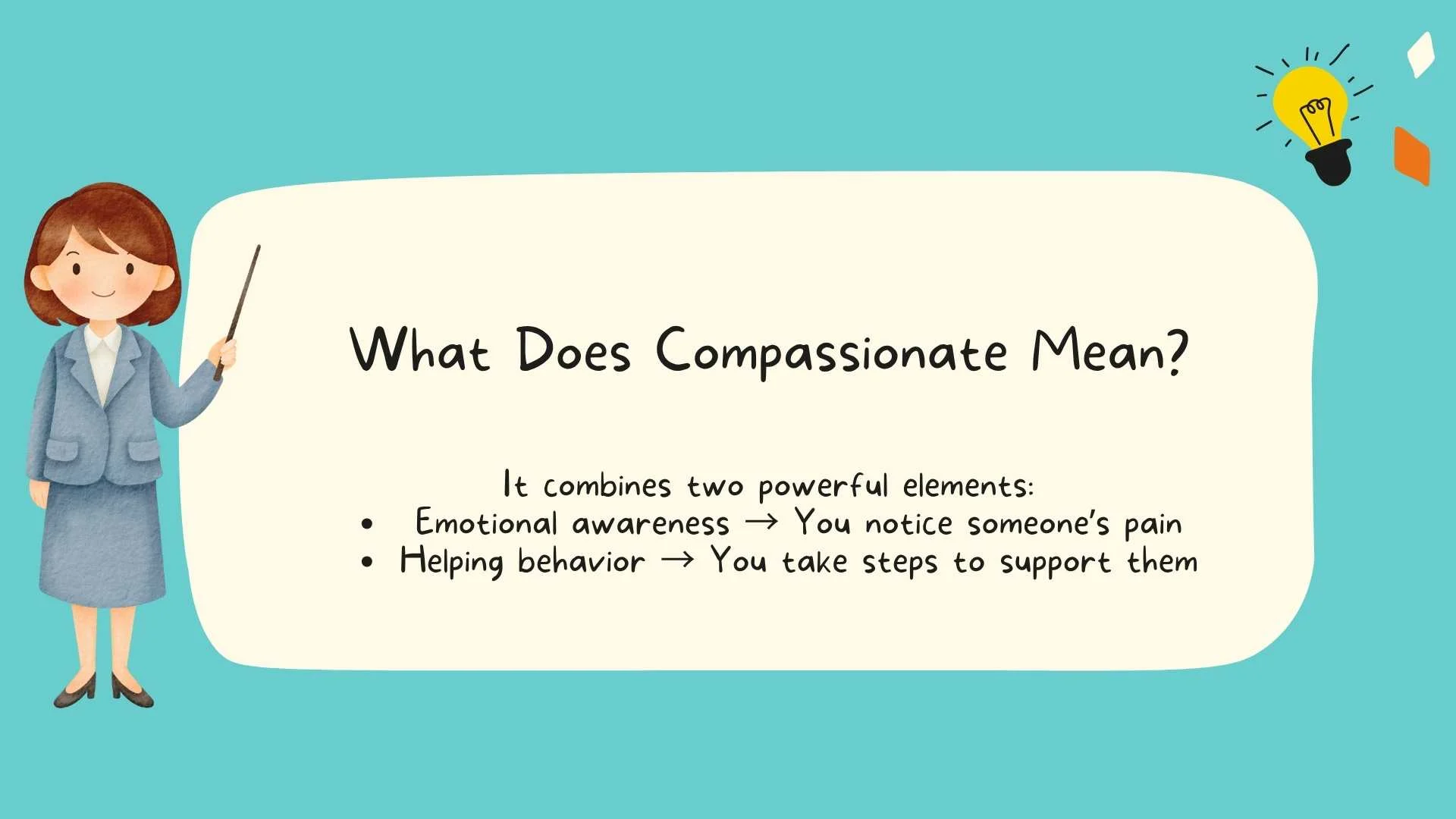
It combines two powerful elements:
- Emotional awareness → You notice someone’s pain
- Helping behavior → You take steps to support them
Unlike passive emotions, compassion pushes you toward action. It’s not just “I feel bad for you.” It’s “How can I help?”
In psychology, compassion is considered a prosocial behavior. That means it promotes positive interactions and supports others in meaningful ways.
Compassion vs Kindness vs Sympathy
People often mix these terms. They sound similar, yet they operate on different levels.
| Trait | Compassion | Kindness | Sympathy |
| Core Idea | Feel + act | Be nice | Feel sorry |
| Depth | Deep emotional + action | Surface-level | Emotional distance |
| Outcome | Support & relief | Pleasant interaction | Acknowledgment only |
- Kindness is polite and friendly
- Sympathy recognizes pain but stays distant
- Compassion steps in and helps
For example:
- Kindness: Holding a door open
- Sympathy: “That sounds tough”
- Compassion: Helping someone solve the problem
Compassion in Everyday Language
You’ll hear “compassionate” used in different contexts:
- Workplace: “She’s a compassionate leader who listens.”
- Healthcare: “Doctors must show compassion to patients.”
- Relationships: “He’s compassionate when I’m stressed.”
In everyday life, compassion shows up as emotional connection, patience, and support during tough moments.
Compassion vs Empathy – What’s the Real Difference?
Empathy Meaning (Quick Definition)
Empathy meaning is simple:
The ability to feel and understand another person’s emotions.
Psychologists break it into two types:
- Cognitive empathy → Understanding someone’s perspective (perspective taking)
- Affective empathy → Feeling what they feel (emotional mirroring)
Empathy builds emotional understanding, yet it doesn’t always lead to action.
Compassion vs Empathy (Core Difference)
Here’s the key distinction:
- Empathy = Feel with someone
- Compassion = Feel + help someone
Empathy is the emotional response. Compassion turns that emotion into helping behavior.
Think of empathy as the spark. Compassion is the flame that does something about it.
Empathy vs Compassion Examples (Real-Life)
Let’s make it real.
Scenario 1: A grieving friend
- Empathy: You feel their sadness
- Compassion: You cook meals, check in daily, offer support
Scenario 2: A stressed coworker
- Empathy: You understand their pressure
- Compassion: You help with tasks or offer solutions
Scenario 3: A stranger in distress
- Empathy: You notice their pain
- Compassion: You step in and assist
That shift from feeling to action defines compassion.
Empathy vs Compassion in Psychology
In empathy vs compassion psychology, researchers highlight an important insight:
- Empathy alone can lead to emotional exhaustion
- Compassion leads to positive action and emotional balance
Why?
Because compassion includes emotional regulation. You stay grounded while helping, rather than absorbing all the pain.
Why Compassion Matters in Human Behavior
Role in Emotional Intelligence
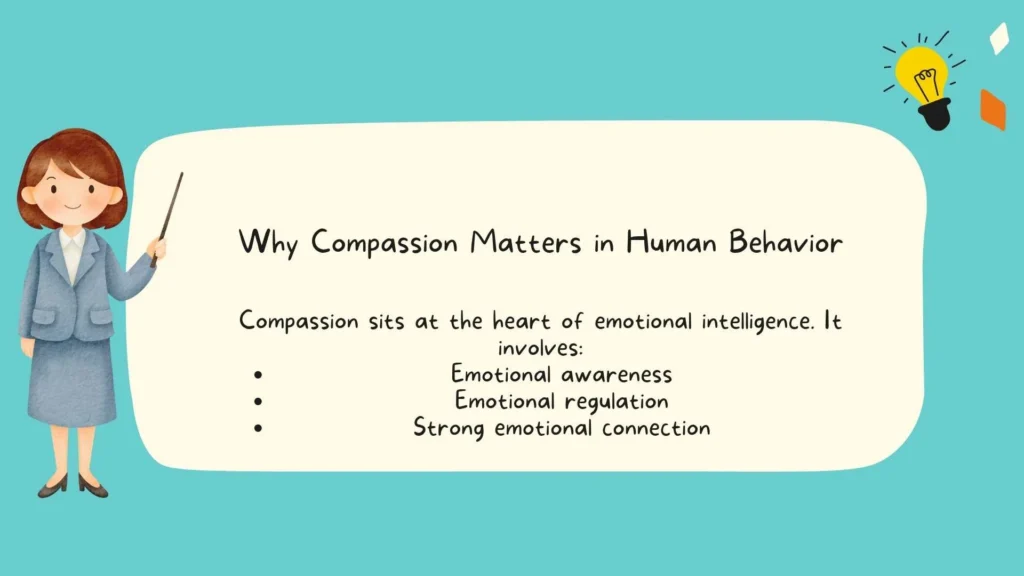
Compassion sits at the heart of emotional intelligence. It involves:
- Emotional awareness
- Emotional regulation
- Strong emotional connection
People with high emotional intelligence don’t just understand feelings. They respond in ways that help others.
Compassion and Mental Health
Compassion improves mental health in powerful ways:
- Reduces anxiety and depression
- Improves emotional well-being
- Encourages healthier coping strategies
According to research from Harvard Health:
👉 https://www.health.harvard.edu/mind-and-mood/the-power-of-compassion
Compassion activates areas of the brain linked to positive emotions and reward.
In other words, helping others helps you too.
Compassion in Relationships
Strong relationships rely on human connection. Compassion strengthens that bond.
It leads to:
- Better interpersonal relationships
- Stronger trust
- Deeper emotional intimacy
When you respond with compassion, people feel seen, heard, and supported.
Compassion and Social Behavior
Compassion shapes society.
It encourages:
- Prosocial behavior
- Stronger support systems
- Reduced social withdrawal
Communities built on compassion tend to be healthier, safer, and more connected.
Real-Life Examples of Compassion
Everyday Compassion Examples
You don’t need grand gestures. Small actions matter.
- Listening without interrupting
- Helping a coworker meet a deadline
- Supporting a friend during emotional distress
These moments build trust and strengthen bonds.
Compassion in Difficult Situations
Real compassion shines under pressure.
Examples:
- Staying calm during conflict
- Supporting someone with anxiety
- Helping a loved one through depression
Instead of reacting emotionally, compassion creates space for understanding and support.
Self-Compassion Examples
Compassion isn’t just outward. It starts within.
Self compassion means:
- Forgiving yourself after mistakes
- Practicing self-care practices
- Setting emotional boundaries
Without self-compassion, helping others becomes draining.
How to Develop Compassion (Step-by-Step Guide)
Step 1 – Build Emotional Awareness
Start by noticing emotions; yours and others’.
- Pay attention to tone and body language
- Practice active listening
- Avoid quick judgments
This strengthens your social cognition.
Step 2 – Practice Perspective Taking
Put yourself in someone else’s shoes.
Ask:
- What might they be feeling?
- Why are they reacting this way?
This deepens emotional understanding.
Step 3 – Turn Empathy Into Action
Don’t stop at feeling. Act.
Simple actions include:
- Offering help
- Checking in
- Providing solutions
This transforms empathy into compassion.
Step 4 – Strengthen Emotional Regulation
Stay balanced.
- Breathe before reacting
- Avoid emotional overload
- Practice mindfulness
Strong emotional regulation prevents burnout.
Step 5 – Practice Self-Compassion
You can’t pour from an empty cup.
- Take breaks
- Set boundaries
- Prioritize your emotional well-being
This ensures sustainable compassion.
Compassion Fatigue – When Caring Becomes Draining
What Is Compassion Fatigue
Compassion fatigue occurs when constant helping leads to exhaustion.
Common in:
- Caregivers
- Healthcare workers
- Highly empathetic individuals
Signs of Compassion Fatigue
Watch for:
- Emotional exhaustion
- Irritability
- Lack of motivation
- Increased stress
Why Empathy Is Emotionally Draining
Empathy can overwhelm you.
Without boundaries:
- You absorb others’ pain
- You experience emotional distress
- You lose emotional balance
This is why compassion; balanced with action; is healthier.
How to Avoid Burnout
Protect yourself:
- Practice stress management
- Maintain emotional detachment (healthy distance)
- Engage in self-care practices
Balance is key.
Compassion vs Empathy vs Sympathy (Quick Comparison Table)
| Trait | Compassion | Empathy | Sympathy |
| Core Idea | Feel + help | Feel with someone | Feel sorry |
| Action | Yes | Sometimes | Rarely |
| Emotional Depth | High | High | Low |
| Outcome | Support & change | Understanding | Distance |
Benefits of Being Compassionate
Personal Benefits
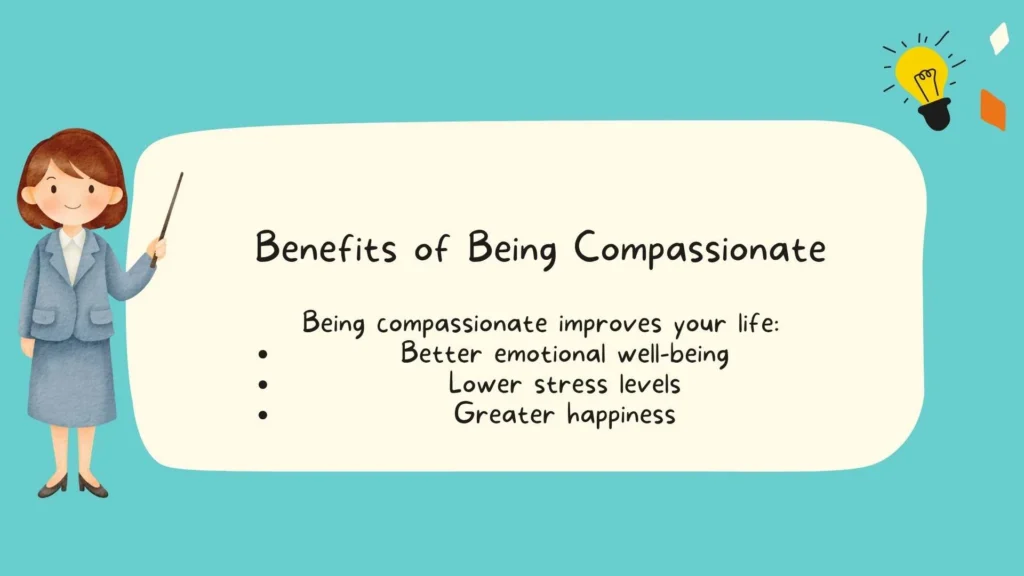
Being compassionate improves your life:
- Better emotional well-being
- Lower stress levels
- Greater happiness
Social Benefits
It strengthens connections:
- Better relationships
- Stronger communities
- Improved communication
Professional Benefits
Compassion enhances your career:
- Builds leadership skills
- Increases workplace trust
- Encourages collaboration
Compassionate leaders create healthier work environments.
FAQs About Compassion
What is compassion in simple words?
It means understanding someone’s pain and taking action to help them.
What is the difference between empathy and compassion?
Empathy feels emotions. Compassion turns those feelings into helpful action.
Can you have empathy without compassion?
Yes. You can feel someone’s pain without helping them.
How do you show compassion daily?
Through listening, helping, and supporting others during difficult times.
Is compassion a skill or a personality trait?
Both. Some people are naturally compassionate, yet it can also be learned and strengthened.
Conclusion: Why Compassion Is More Than Just a Feeling
Compassion goes deeper than emotion. It blends emotional awareness, understanding, and action into something powerful.
In a world filled with stress and disconnection, compassion acts like a bridge. It connects people, strengthens relationships, and improves mental health.
Start small. Listen more. Help when you can.
Because at the end of the day, being compassionate isn’t about grand gestures. It’s about showing up; consistently, thoughtfully, and with intention.
Also Check These Posts:
What Does Shibal Mean? Understanding the Korean Swear Word
What Does YW Mean in Text? Complete Guide to its Meaning, Uses and Context
What Does Cancelled Call Mean? Complete Guide to Understanding Cancelled, Missed and Blocked Calls

Ava Grace is a passionate writer who believes in the power of words to heal, inspire, and uplift. Through Quoteliy.com, she shares daily doses of motivation, love, and positivity to brighten your day. Her mission is to turn simple quotes into meaningful moments that connect hearts and spark hope.