

When you hear the word chai, what comes to mind? For millions around the world, chai isn’t just tea; it’s warmth in a cup, a moment of connection, and a centuries-old ritual.
Originating in India, chai has grown beyond its borders, influencing cafes from New York to London.
In this article, we’ll dive into the history, ingredients, preparation, culture, flavors, and global adaptations of chai, giving you a complete understanding of what makes this Indian tea so special.
The Origins of Chai – History Behind the Brew
Chai has a rich history that traces back thousands of years.
While tea leaves themselves are native to regions like Assam and Darjeeling, the combination of milk, spices, and sweeteners developed over time as tea became an integral part of Indian life.
Ancient Tea in India
Tea cultivation in India began in Assam, where wild tea plants were discovered centuries ago.
Local groups used leaves for medicinal purposes and brewed simple infusions.
In Darjeeling, tea cultivation later became structured during British colonial times, giving the region its reputation for fine, aromatic teas.
British Colonial Impact
The British East India Company played a pivotal role in popularizing tea in India.
They introduced systematic cultivation of black tea, exported it worldwide, and encouraged its consumption among locals.
Masala chai, or spiced tea, evolved during this period as Indians adapted tea with spices and milk to suit local tastes.
Chai as a Daily Ritual
By the late 19th century, chai had become a staple in Indian households.
Families brewed it daily for breakfast or evening breaks, often sharing it with neighbors and guests.
Street vendors, known as chaiwallas, made it widely accessible, turning tea into a cultural staple.
Regional Variations in India
India’s size and diversity have given rise to numerous regional chai variations. In Assam, tea tends to be strong and malty.
Darjeeling tea offers a lighter, floral taste. In Kashmir, green tea is used with aromatic spices for a distinct flavor.
Even sweeteners differ: some regions prefer white sugar, others jaggery, giving each cup a unique character.
Global Spread of Chai
With migration and globalization, chai traveled across oceans.
In the U.S., cafes like Starbucks and Teavana popularized the chai latte, while collaborations like Oprah Chai Tea brought Indian flavors to mainstream audiences.
Today, chai culture thrives globally, blending tradition with modern innovation.
What Is Chai? Definition and Ingredients
Understanding what chai means starts with its definition and components.
Core Meaning of Chai
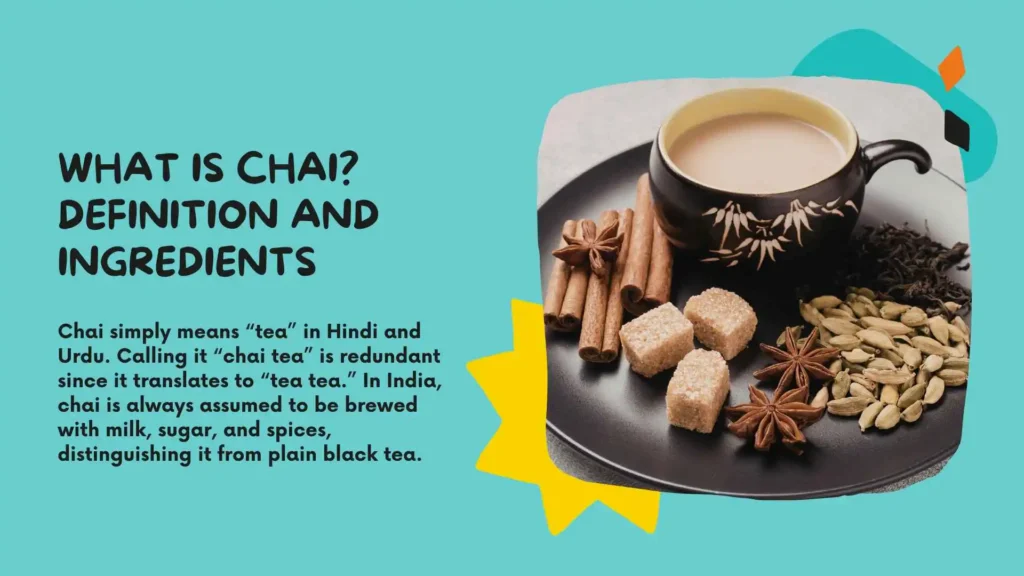
Chai simply means “tea” in Hindi and Urdu. Calling it “chai tea” is redundant since it translates to “tea tea.” In India, chai is always assumed to be brewed with milk, sugar, and spices, distinguishing it from plain black tea.
Base Ingredients
The foundation of chai includes:
- Tea leaves – Black tea (Assam or Darjeeling), or green tea in Kashmir
- Milk – Traditionally whole milk, but sometimes plant-based alternatives
- Water – To boil tea and blend spices
Common Spices in Masala Chai
Spices are what give masala chai its signature warmth and aroma. Typical ingredients include:
- Cardamom – Sweet and fragrant
- Cinnamon – Adds warmth
- Ginger – Gives a subtle kick
- Cloves – Pungent and earthy
- Star anise – Licorice-like aroma
Optional additions: coriander, nutmeg, fennel, lemongrass, basil
Sweeteners
Sweetness balances spices:
- White sugar – Standard in many households
- Jaggery – Unrefined cane sugar, gives a caramel-like flavor
- Honey – Occasionally used for health benefits
Variations and Modern Twists
Modern adaptations include:
- Rooibos chai – Caffeine-free alternative
- Herbal chai – Incorporates mint, lemongrass, or tulsi
- Iced chai lattes – Popular in Western cafes
How Chai Is Prepared – Traditional and Modern Methods
Brewing chai is an art as much as a ritual.
Step-by-Step Traditional Preparation
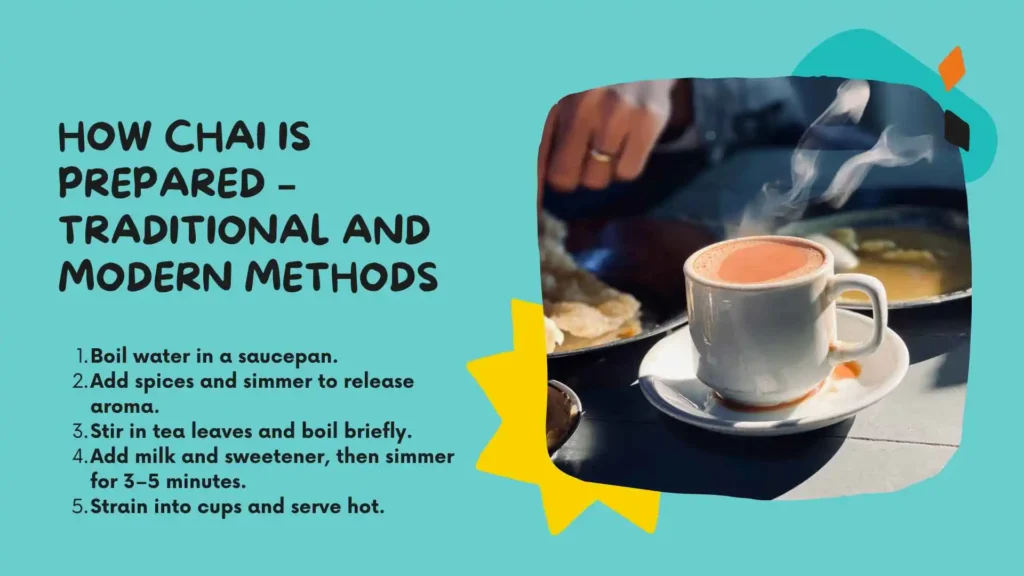
- Boil water in a saucepan.
- Add spices and simmer to release aroma.
- Stir in tea leaves and boil briefly.
- Add milk and sweetener, then simmer for 3–5 minutes.
- Strain into cups and serve hot.
Chaiwallas – India’s Tea Vendors
Chaiwallas are ubiquitous in India, selling tea on streets, at markets, and in train stations. They brew in large kettles, serve in clay cups (kulhads), and often add secret spice blends that define local flavors.
Tools and Techniques
- Kettle for boiling
- Strainer to filter leaves and spices
- Mortar & pestle to grind fresh spices
- Water-to-milk ratio and brewing time affect taste and strength
Quick and Modern Methods
- Tea bags or pre-mixed masala chai powders
- Electric kettles and milk frothers
- Instant chai for busy mornings
Brewing Tips for Flavor Optimization
- Use fresh, high-quality tea leaves
- Adjust spice intensity according to taste
- Balance sweetness with strong tea for a full-bodied flavor
Chai Culture – More Than Just a Drink
Chai is embedded in Indian society beyond its taste.
Chai as Social Glue
From office breaks to street-side conversations, chai brings people together. Offering a cup is a gesture of hospitality and friendship.
Chai and Indian Festivals
Tea accompanies celebrations like Diwali and Holi, often paired with sweets and savory snacks.
Snacks and Pairings
- Parle-G biscuits – Classic tea companion
- Samosas – Spicy fried pastry
- Pakoras – Vegetables in chickpea batter
- Murukku – South Indian crunchy snack
- Sandwiches and regional breads
Chai in Popular Media
Bollywood films, literature, and global media often depict chai as a symbol of comfort. Brands like Starbucks and Oprah Chai Tea have brought it to international attention.
Health and Wellness Perspectives
Spices in chai aid digestion, and tea leaves provide antioxidants. Milk adds protein and calcium, making it a nourishing beverage.
Understanding Chai Flavors – Aroma, Body, and Spice Balance
A perfect cup of chai is more than a mix of ingredients; it’s a flavor experience.
Flavor Profiles Across India
| Region | Tea Type | Flavor Profile |
| Assam | Black tea | Strong, malty, full-bodied |
| Darjeeling | Black tea | Light, floral, delicate |
| Kashmir | Green tea | Aromatic, spiced, smooth |
Aroma and Color
Spices like cardamom and cinnamon enhance fragrance. The milk-to-tea ratio affects color, giving chai its signature creamy hue.
Sweetness and Spice Intensity
Balance is key. Too much sugar dulls spice, while too many spices overpower tea. Regional variations matter: Bhopal chai is often spicier, while Mumbai chai leans sweeter.
Masala Blends Explained
- Standard blend: Cardamom, cinnamon, ginger, cloves, pepper
- Regional twist: Add star anise, fennel, or basil for unique flavor
Pairing Flavors with Snacks
Chai complements sweet, savory, and fried snacks. Matching spice intensity with snack flavor creates a holistic tasting experience.
Chai Around the World – Adaptations and Trends
Chai has traveled far from Indian streets to global cafes.
American and European Chai Drinks
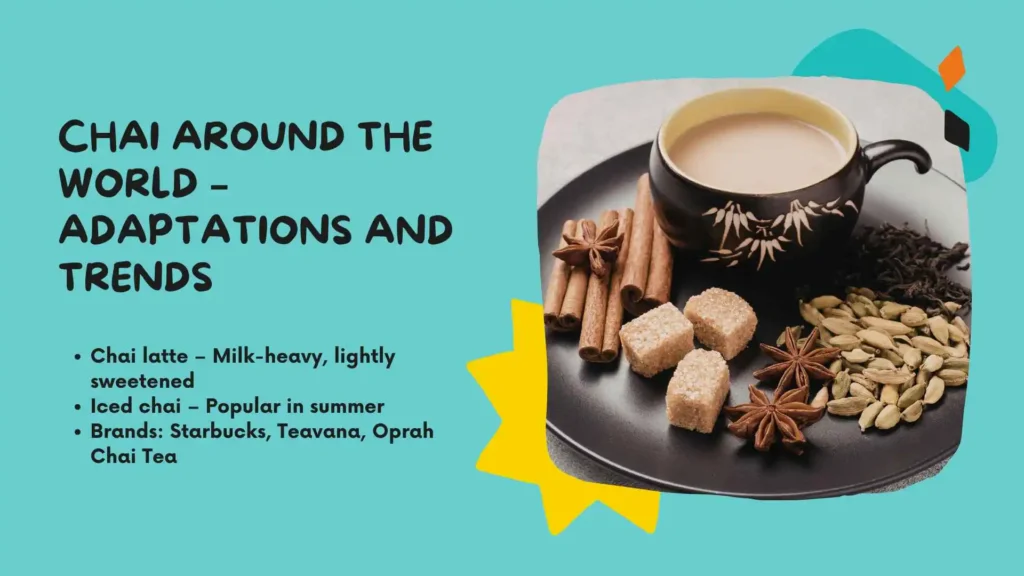
- Chai latte – Milk-heavy, lightly sweetened
- Iced chai – Popular in summer
- Brands: Starbucks, Teavana, Oprah Chai Tea
Fusion Recipes
- Chai desserts: Cakes, ice creams, puddings
- Chai cocktails: Infused with whiskey or rum
Health-Focused Variations
- Vegan milk alternatives (oat, almond, soy)
- Low sugar or sugar-free options
- Turmeric chai for anti-inflammatory benefits
Commercial Influence on Taste
Global brands often standardize flavors for consistency, sometimes diverging from traditional spice blends.
Keeping the Tradition Alive Abroad
Indian diaspora maintains authentic chai culture, organizing chai festivals, tea workshops, and community events worldwide.
FAQs About Chai – Clarifying Common Confusions
- Is “chai tea” redundant?
Yes, “chai” already means tea; “chai tea” literally translates to “tea tea.” - What spices are essential for authentic masala chai?
Cardamom, cinnamon, ginger, cloves, and black pepper are the core spices. - Can I make chai without milk?
Yes, water-based or plant-based versions exist, but milk enhances creaminess. - How is chai different from Western tea?
Western tea is often served plain or with milk and sugar separately. Chai is brewed with spices, milk, and sweetener together, creating a unique flavor. - Best tips for replicating street-style chai at home?
Use fresh spices, simmer long enough, and balance tea strength with milk and sweetener.
Conclusion
Chai is far more than a drink; it’s a cultural emblem, a sensory experience, and a daily ritual for millions.
From street-side chaiwallas to global cafes, every cup tells a story of history, flavor, and connection.
Whether you sip it with Parle-G biscuits or share it at a festival, understanding what chai means helps you appreciate why it’s cherished worldwide.

Bonnie Mae is a thoughtful writer with a deep love for words that inspire and heal. At Quoteliy.com, she shares heartfelt quotes about life, love, and self-growth — each crafted to bring peace and positivity to your day. Her passion lies in turning simple thoughts into meaningful reflections that touch hearts and spark hope.