

You’ve seen the broiler setting on your oven. Maybe you’ve ignored it. Maybe you’ve burned garlic bread with it once and never touched it again.
So what does broil mean exactly?
Broiling is a high heat cooking method that uses direct heat from above to cook food quickly and create a browned, crispy surface.
Think of it as an upside-down grill inside your oven.
However, there’s more happening than just “turning on high heat.”
When you understand the science, rack positioning, and timing, broiling becomes one of the most powerful cooking techniques in your kitchen.
This guide breaks it all down. Clear. Practical. No fluff.
What Does Broil Mean in Cooking? (Definition + Food Science)
The Exact Definition of Broiling
At its core, broiling is a direct heat cooking method.
- Heat comes from the top heat source in the oven.
- The broil element glows red hot.
- Temperatures often exceed 500–550°F.
- Food sits a few inches below the heating element.
- Cooking happens fast.
Unlike baking or roasting, broiling does not rely on uniform ambient heat. Instead, it blasts food with maximum direct heat from above.
If grilling is outdoor cooking from below, broiling is its indoor twin.
How the Broiler Actually Works
Inside your oven cavity, the heating element at the top produces intense radiant heat.
Radiant heat behaves differently than circulating air:
- It transfers energy directly to the surface.
- It accelerates browning food.
- It promotes charring food in seconds.
- It creates a crisp finish.
That’s why food under a broiler browns quickly while the inside can remain moist.
In many ovens, you’ll find:
- A broiler drawer below the oven
- Or a top oven broiler setting
- A high vs low broiler setting
High produces aggressive browning. Low gives you more control.
Direct Heat vs Ambient Heat
Understanding this difference changes everything.
| Feature | Broiling | Roasting |
| Heat direction | From above | Surrounding |
| Temperature | 500°F+ | 325–450°F |
| Speed | Very fast | Moderate |
| Main goal | Surface browning | Even cooking |
| Best for | Thin proteins, finishing | Large cuts |
Roasting surrounds food with air. Broiling exposes it to intense surface energy.
That’s why broiling creates a crispy exterior and moist interior when done right.
The Browning Process: Why Broiling Tastes So Good
Two scientific reactions dominate under a broiler:
Caramelization
Sugar molecules break down under high heat and turn golden brown.
Maillard reaction
Proteins and sugars react together to form complex flavor compounds.
That’s why broiled steak tastes richer. That’s why broiled pineapple develops deeper sweetness.
This is not just cooking. It’s chemistry.
How to Use a Broiler: Step-by-Step Broiling Technique
If you want results instead of smoke alarms, follow this process.
Preheating the Broiler
Always preheat.
- Turn on broiler.
- Let it heat for 5–10 minutes.
- Allow the broil element to glow fully red.
- Never skip this step.
- Cold elements reduce browning efficiency.
Without preheating, you lose the advantage of high heat cooking.
Rack Positioning and Control
Distance controls intensity.
| Rack Position | Best Use |
| 3–4 inches from heat | Thin cuts, melting cheese |
| 5–7 inches from heat | Steaks, salmon |
| Lower rack | Thick cuts finishing |
Thin foods sit closer. Thick foods need distance.
Improper rack positioning causes scorching outside and raw interior.
Choosing the Right Cookware
Use metal. Avoid glass.
Best tools:
- Broiler pan
- Metal baking sheet
- Sheet tray
- Baking rack
- Heavy-duty foil lining
Avoid glass cookware. Rapid temperature shifts can cause shattering.
A broiler pan allows fat to drip, which reduces flare ups.
Monitoring Food Closely
Broiling demands attention.
- Stay in the kitchen.
- Check every 1–2 minutes.
- Rotate tray halfway.
- Flip thin proteins.
- Watch for heavy browning.
Unlike roasting, broiling doesn’t forgive distraction.
Internal Temperature Matters
Never guess doneness.
Use a thermometer.
| Food | Safe Internal Temperature |
| Chicken cutlets | 165°F |
| Pork chops | 145°F |
| Salmon | 125–130°F |
| Shrimp | 120°F |
| Steak (medium rare) | 130–135°F |
Remember carryover cooking. Remove meat 5°F before target. Let it rest.
Resting meat redistributes juices and improves texture.
Best Foods for Broiling (What Works and Why)
Broiling works best for foods that cook quickly.
Thin Proteins
Ideal for broiling for beginners.
- Fish fillets
- Chicken cutlets
- Shrimp
- Thin steaks
- Broiled tofu
These cook through before the exterior burns.
Thick Cuts With Strategy
Thicker meats require smart technique.
- Pork chops
- Bone-in meats
- Salmon fillets
- Ribeye steaks
- Pork belly
Start lower in the oven. Finish close to the heat for crust.
This method is called reverse searing.
Broiled Vegetables
Vegetables shine under a broiler.
- Asparagus
- Broccoli
- Bell peppers
- Zucchini
- Refresh leftover vegetables
Light oil coating enhances browning.
For dense vegetables, consider blanch before broiling to soften interior first.
Cheese and Bread Dishes
Broilers excel at finishing.
- Garlic bread under broiler
- Melt cheese on casseroles
- Toast casserole crust
- French onion soup
- Nachos
This technique delivers bubbling tops and golden crusts in seconds.
Broiled Fruits and Quick Desserts
Fruit caramelizes beautifully.
- Broiled pineapple
- Broiled bananas
- Peaches
- Stone fruits
- Grapefruit halves with sugar
Add sugar for a brûlée-style crust.
You get a quick dessert in under five minutes.
Advanced Broiling Method: Level Up Your Technique
Once you master basics, you can control texture precisely.
Glazing Meat Properly
Sugar burns fast.
So:
- Cook meat first.
- Brush glaze during final 2 minutes.
- Rotate tray for even shine.
- Avoid thick sugary marinades early.
This prevents scorching while achieving shine.
Par-Cooking for Better Results
For thick cuts:
- Roast at 350°F until 10°F below target.
- Switch to broiler.
- Finish for crust.
This creates textural contrast without raw centers.
Restaurants use this constantly.
High vs Low Broiler Setting
Many ovens offer both.
| Setting | Best For |
| High | Thin proteins, browning |
| Low | Thick cuts, melting cheese |
Low offers control. High produces aggressive browning.
Choose intentionally.
Creating Perfect Texture Contrast
Great broiling achieves:
- Crispy exterior
- Tender texture
- Moist interior
- Heavy browning
- Controlled charring
Use oil lightly. Too much oil increases burning risk.
Broiling Safety and Maintenance
High heat means responsibility.
Preventing Flare Ups
Flare ups happen when fat hits heat.
Prevent them by:
- Trimming excess fat.
- Using broiler pan.
- Avoiding excessive oil.
- Cleaning grease buildup.
- Monitoring closely.
Grease accumulation increases fire hazard.
Oven Door Position
Some ovens require leaving the door slightly open.
Check your user manual.
Modern ovens regulate heat automatically. Older models may not.
Avoid Glass Cookware
Rapid heat exposure can cause:
- Glass shattering
- Food contamination
- Injury
Use metal pans only.
Cleaning the Broiler Drawer
Regular maintenance prevents smoke.
- Remove debris.
- Wipe cooled surfaces.
- Clean oven cavity.
- Inspect heating element.
- Clear dust accumulation.
Clean broilers heat more evenly.
Broiling for Beginners: Simple Practice Recipes
Start small. Build confidence.
Basic Broiled Salmon
- Preheat broiler.
- Pat salmon dry.
- Season with salt.
- Place 5–6 inches from heat.
- Broil 6–8 minutes.
Result: Crispy top. Flaky center.
Garlic Bread in Two Minutes
- Spread butter and garlic.
- Place under broiler.
- Watch constantly.
- Remove when golden.
- Serve immediately.
Miss the timing by 30 seconds and it burns.
Precision matters.
Refresh Leftover Vegetables
Leftovers often taste dull.
Revive them by:
- Tossing lightly with oil.
- Spreading evenly.
- Broiling 3–4 minutes.
- Stirring halfway.
You restore texture and flavor instantly.
Comparing Broiling to Other Cooking Methods
Understanding differences improves mastery.
Broiling vs Grilling
| Feature | Broiling | Grilling |
| Location | Indoors | Outdoors |
| Heat direction | From above | From below |
| Smoke flavor | Minimal | Strong |
| Weather dependent | No | Yes |
Broiling suits apartment ovens and year-round cooking.
Broiling vs Baking
Baking relies on uniform ambient heat. Broiling uses concentrated direct exposure.
Baking cooks through gently. Broiling finishes aggressively.
Broiling vs Roasting
Roasting builds flavor gradually.
Broiling intensifies surfaces rapidly.
They often work together.
Common Broiling Mistakes
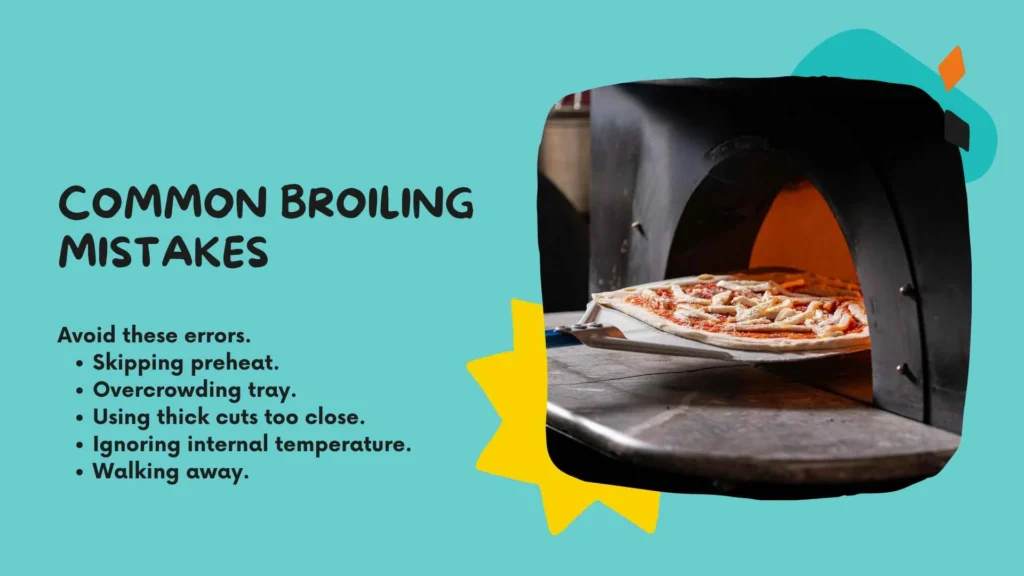
Avoid these errors.
- Skipping preheat.
- Overcrowding tray.
- Using thick cuts too close.
- Ignoring internal temperature.
- Walking away.
Broiling punishes inattention.
Expert Tips for Mastering the Oven Broiler
- Dry surface before broiling.
- Use light oil coating.
- Always preheat.
- Adjust rack mid-cook if needed.
- Remove food early to account for carryover cooking.
- Rest meat after broiling.
Confidence grows with repetition.
Frequently Asked Questions About Broiling
What does broil mean exactly?
It means cooking food using direct high heat from above in an oven.
Is broiling the same as grilling?
No. Grilling heats from below. Broiling heats from above.
Can you broil in an electric oven?
Yes. Most electric ovens include a broiler setting on oven controls.
Why does food burn so fast?
Because temperatures exceed 500°F and heat is concentrated.
Should you leave oven door open?
Check your manufacturer guide. It varies.
Final Thoughts on Broiling at Home
Mastering the broiling technique transforms everyday cooking.
You gain:
- Speed
- Flavor intensity
- Texture control
- Professional finishing skills
Broiling isn’t complicated. It’s precise.
Understand heat direction. Monitor closely. Control distance.
Do that and you unlock one of the most powerful tools in your kitchen.

Jianna is a creative writer who believes that words have the power to heal, inspire, and transform. At Quoteliy.com, she shares beautiful quotes about love, life, and self-discovery — each crafted to uplift hearts and spark reflection. Her writing style blends emotion with wisdom, leaving readers feeling understood and inspired.